
Review · NORTHERN LIGHTS TOURS
6-day Ultimate Iceland Tour: Photography and Northern Lights
Iceland looks best through a lens and a plan. This 6-day private tour is built around photography help and a steady rhythm of Iceland icons, from tectonic fracture sites to black sand coasts, with northern lights in the mix.
I especially like the way the trip blends famous stops with a guide who pays attention to the shot and the story, not just the checklist. The included photography services and daily guidance mean you spend more time composing and less time guessing where to stand.
One thing to consider is that this is intense driving with lots of outdoor stops, and Iceland weather can change the game, especially for night sky plans. Also, accommodation and meals are not included, so you will want to budget for them separately.
In This Review
- Key highlights you will feel fast
- Photography-first routing from Reykjavik
- Reykjanes Peninsula geothermal and tectonic photo stops
- Golden Circle with UNESCO Þingvellir and the Strokkur timing
- West Iceland coast drama: basalt, caves, and Kirkjufell frames
- South Coast waterfalls and black-sand drama down to Vik
- Vatnajökull ice country: Skaftafell trails to Jökulsárlón
- East and South edges: Vestrahorn, Heimaey, lava fields, Sólheimasandur
- Price and logistics: what $9,299 for up to 8 really buys
- Weather, timing, and how to pack for northern lights nights
- Should you book this Ultimate Iceland Tour?
- FAQ
- How many people are in the group?
- Is this a private tour or shared?
- Where does the tour start, and what time does it begin?
- Is pickup offered?
- What language is the tour offered in?
- What is included in the price?
- Are accommodation and meals included?
- Are entrance fees included for attractions?
- Is glacier hiking included?
- What is the cancellation policy?
- Who runs the experience?
Key highlights you will feel fast
- Private group up to 8, so you can move at a pace that works for your photos and your energy
- Professional photography services that help turn stops like Kirkjufell and Vestrahorn into real keepsakes
- Big-name Iceland, tightly chosen, including Þingvellir, Geysir, Gullfoss, Skógafoss, and Jökulsárlón
- Geothermal variety in one arc, from Gunnuhver and Krýsuvík to the Secret Lagoon
- Iceberg drama on black sand, with Diamond Beach and optional ice-lagoon outings
- All-weather scheduling mindset, since the experience requires good weather and you may shift dates if nature misbehaves
Chasing the lights? These are the other hunts we sat through
Photography-first routing from Reykjavik
This is a private, photography-focused way to see Iceland without feeling like you are racing your own itinerary. You start at 9:00 am in Reykjavik, and from the start the emphasis is on making each stop workable for cameras, not just passable for photos.
I like that Luke EM and the team keep the day flowing with guidance and practical timing. You get private transportation, bottled water, and Icelandic snacks, so the trip feels smoother when conditions are cold, windy, or simply messy.
This kind of tour is also a time saver. Instead of building your own day-by-day route around photo hotspots, you get a planned sequence across the Reykjanes Peninsula, the Golden Circle, the South Coast, and into the Vatnajökull region and beyond.
Reykjanes Peninsula geothermal and tectonic photo stops
Your first stretch leans into what makes Iceland feel like a science project with epic scenery. You begin at the Bridge Between Continents, a simple footbridge placed over the fissure that symbolizes the separation between the North American and European tectonic plates. Even without a lecture voice, this spot helps you see the rest of the trip differently, like the ground itself is the main character.
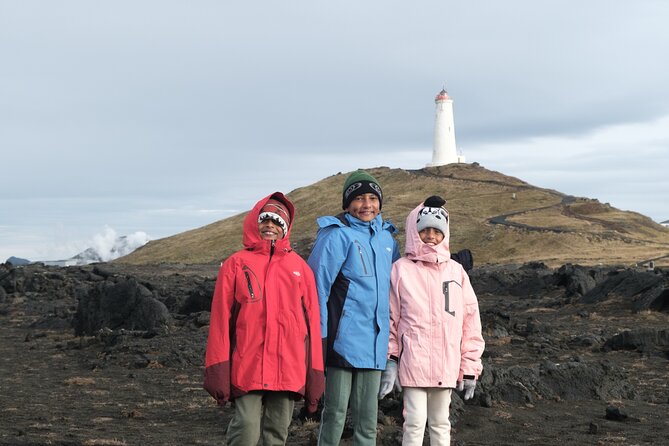
Next comes Reykjanes Lighthouse, one of the oldest lighthouses in Iceland. The location works well for photography because you get strong ocean light and big rock-and-sky contrast, even when the weather turns moody.
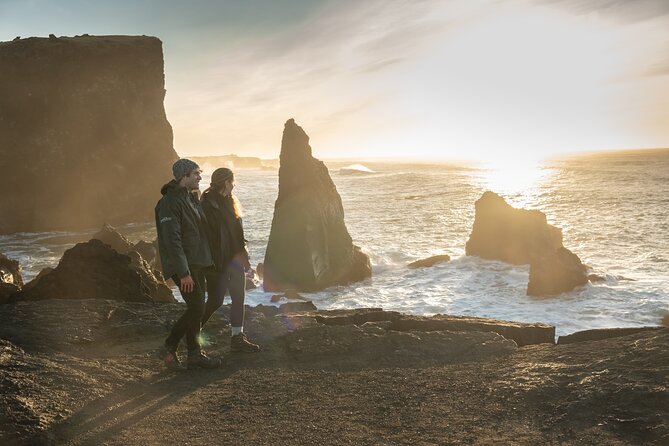
At Valahnúkamöl, you will stand above craggy cliffs pounded by the elements for thousands of years. The jagged texture there is a dream if you shoot detail shots, and it also gives you a good sense of scale before the geothermal areas.
Then it turns up the heat. Gunnuhver Hot Springs is a geothermal field of colorful mud pools and fumaroles, tied to Icelandic folklore about ghosts, curses, and the saving power of Christianity. For photos, the steam acts like a moving filter, and the reds, yellows, and browns in the mud can photograph surprisingly well when the light breaks through.
Close by, Krýsuvík brings even more geothermal color, with steam rising and bubbling mud pools creating a lively, almost rhythmic scene. Kleifarvatn Lake adds a calmer contrast, a large lake on the Reykjanes Peninsula, and it is especially useful for wider compositions when you want less chaos in the frame.
You also get a “live geology” moment at Fagradalsfjall Volcano, described as a fresh dried lava valley from a recent eruption. It is the kind of scenery that looks otherworldly in daylight and dramatic when skies darken.
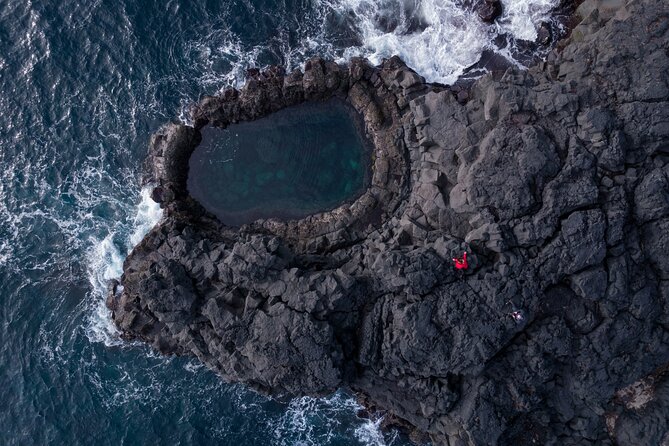
For coastal textures, Brimketill offers a small naturally carved pool at the edge of lava shoreline west of Grindavík. Then you roll into Grindavík, a fishing town where even a coffee stop can feel part of the scenery cycle, not just a pause.
To finish this section, Hafnaberg delivers long sea lava cliffs south of Hafnir. It is built for wind and wide angles, and it is the kind of place where your photos can look like they were shot with a bigger camera than you actually have.
Golden Circle with UNESCO Þingvellir and the Strokkur timing
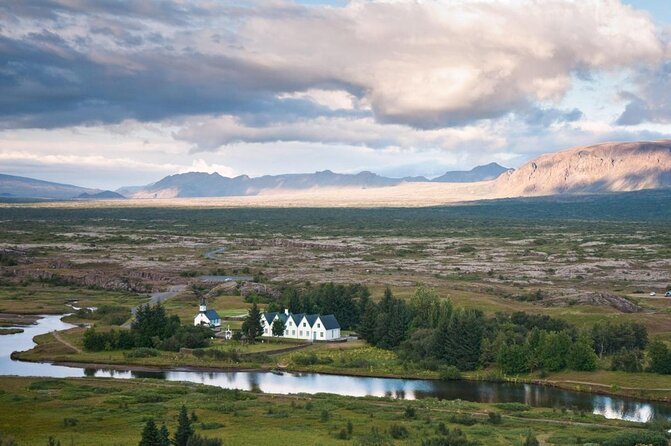
The next days shift from dramatic geothermal texture to classic Iceland icons, with Þingvellir National Park at the center. Þingvellir is a UNESCO World Heritage Site and a meeting point for the North American and Eurasian tectonic plates, plus it is a historic place where Iceland’s early democratic parliament was founded in 930 AD. It is both a geology stop and a human history stop, and that mix makes it feel weighty without being boring.
From Þingvellir, you move to the Geysir geothermal area, where the big lesson is timing. The Great Geysir is no longer active, but Strokkur is, and it erupts about every 5 to 10 minutes, sometimes around 20 meters up. For photographers, that eruption interval means you can set up, step back into position, and get multiple chances without sprinting every time the ground starts to rumble.
Gullfoss is the next “how is this real” moment. You get a waterfall that roars into a canyon after stepping down a gradual slope, and mist can create a giant rainbow effect when sunlight lines up. Even if the rainbow does not show up that day, the mist and scale still read well in photos.
You then stop at Kerið Crater, a volcanic crater lake formed around 3000 years ago, known for maroon mineral sediment, dark lava rocks, and blueish water. This is a solid break from sheer scale, because you can photograph color layers and reflections in a more contained frame.
For a more human pause, you visit Fridheimar, where the included experience is tomato soup served on a buffet with sour cream, home-baked bread, cucumber salsa, butter, and fresh herbs. Yes, it is food, but it also functions as a warm indoor reset so you can keep shooting without freezing your hands off.
Finally, you soak at the Secret Lagoon, Gamla Laugin, described as Iceland’s oldest swimming pool, made in 1891. That stop is not just relaxing, it is also practical for photography because you get a warm, steamy atmosphere that changes how you feel about the next cold outdoors segment.
Other Reykjavik outings that keep coming up in our notes
- Silfra Drysuit Snorkeling with Free Photos – Meet on Location★ 5.0 · 1,299 reviews
- From Reykjavik: Northern Lights Guided Tour with Photos★ 4.3 · 718 reviews
- Silfra Drysuit Snorkeling Tour with Free Photos – From Reykjavik★ 5.0 · 624 reviews
- Golden Circle & Snorkeling in Silfra From Reykjavík with Free Photos★ 5.0 · 571 reviews
- From Reykjavik: Silfra Snorkeling with Free Photos★ 4.8 · 506 reviews
West Iceland coast drama: basalt, caves, and Kirkjufell frames
This portion leans heavily into coastal Iceland, where black stone, waves, and cliff geometry do most of the storytelling for you. You start with Olkelda Mineral Spring, accessible via a public tap, with iron-rich mineral water that stains the surrounding ground a bright red. It is quick, but it is a memorable sensory detail when you see it in person.
Then you hit Ytri Tunga Beach, known for ocean scenery and a seal colony. If you like wildlife watching, this is your kind of stop because you can slow down and wait, while the ocean does its constant background work.
At Budakirkja, you find a small church built from black wood, rebuilt in 1987 on an earlier site. The church is pretty, but the real payoff is the surrounding view, which gives your photos depth even when the weather flattens the sky.
Sönghellir Cave adds a different Iceland flavor. It is called the singing cave because of its acoustics, and you can also see centuries-old graffiti, including names of two 18th-century travellers. It is a short stop, but it is a strong reminder that Iceland is not only geology, it is also people and time.
Londrangar Basalt Cliffs bring you crater remnants eroded into shape by the sea, plus local folklore that the hill belongs to elves, which is why farmers never make hay there. That detail helps you understand why places like this feel mythic, even in daylight.
Next comes Djupalonssandur Beach, described as a black lava pearl beach with an arched bay, intense black sand, and scattered coast rocks. This is a stop where you can shoot from multiple angles without needing high tech, because the texture does the heavy lifting.
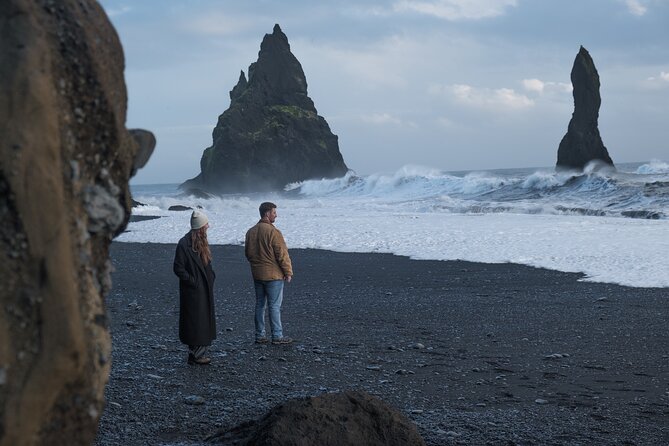
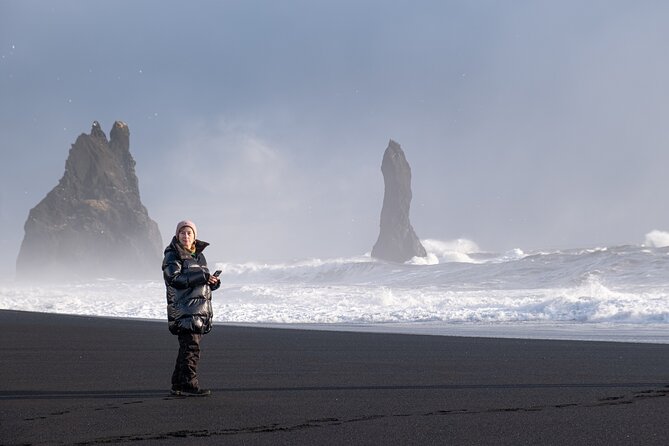
From there you continue with Reynisfjara Beach, often described as wild and dramatic, with powerful Atlantic waves and sea stacks like Reynisdrangar. It is a popular filming location too, and it is the kind of scenery that reads instantly on camera.
You also climb briefly at Saxholl Crater, a 109 m crater formed by volcanic eruption 3 to 4,000 years ago, with a staircase built up the side. It is only about a five-minute walk to the top, but the views can make the climb worth it for both photos and perspective.
Then you reach the part many people dream about: Kirkjufellsfoss and Kirkjufell. Kirkjufellsfoss is one of Iceland’s most photographed waterfalls, not because it is the biggest, but because of the mountain shape of Kirkjufell in the background. Kirkjufell itself is described as the most photographed mountain in Iceland, and it is also recognized from Game of Thrones as Arrow Head Mountain. If you are a photographer, this is where you can plan your angles and work through compositions until the light behaves.
South Coast waterfalls and black-sand drama down to Vik
Now you shift to the South Coast, where the waterfalls stack up and the ocean adds nonstop motion. Your day starts at Seljalandsfoss, a 60 m cascade you can walk behind. That behind-the-water perspective is what makes it more than a quick look, and it also gives you a fun way to shoot reflections and silhouettes when conditions cooperate.
A short hop brings you to Gljúfrabúi waterfall, described as an off-the-main path kind of wonder near the Ring Road. It is 40 m, and the setting helps the falls feel like they are framed by rock instead of simply falling into open space.
Then comes Skógafoss, one of the biggest waterfalls in Iceland, with a 60 m drop and about 25 m width. You can walk right up, but you should expect to get drenched, which is an important practical note if your camera gear is not already protected.
You also stop at Gluggafoss, also known as Merkjarfoss, described as a hidden gem with a rare geological composition and a two-step drop. The description compares the form to an inverted trident, which can help you visualize what to capture if you want the falls as sculpture.
For coastline, you return to Reynisfjara Beach and then move toward Dyrhólaey, a small peninsula known for a giant black arch formed from lava. Dyrhólaey matters in photography because the arch shape creates a strong silhouette option, and it is also a nesting ground where migrating birds lay eggs in large numbers in season.
You finish the day in Vik, described as the southernmost village in Iceland, with a population around 300. If you are visiting in summer, there is a chance to spot puffins, and the town is a useful base because you can reset after long outdoor stretches.
The day also includes a stop at Sólheimajökull Glacier, part of the larger Mýrdalsjökull glacier, located between Katla and Eyjafjallajökull. This is a strong “fire and ice” contrast point before you head deeper into Vatnajökull territory.
Vatnajökull ice country: Skaftafell trails to Jökulsárlón
As the route moves east and south toward glacier country, you get more hiking options and more time with ice forms. Early on you drive across Skeiðarársandur in the area around Kirkjubaejarklaustur, with vast black sandy desert washed by glacial rivers. It feels empty in the best way, and it is great for wide-angle shots that show scale.
In Skaftafell National Park, you get access to a visitor center and a walk, with the area shaped by interactions of fire and ice. It sits beneath the Vatnajökull ice cap, and the region is tied to one of Iceland’s most active volcanic systems, so you are standing in a place where calm scenery and volcanic potential share the same horizon.
You hike to Svartifoss, described as a picturesque waterfall surrounded by basalt columns. The basalt formation is the draw for photographers, because it creates strong repeating lines that frame the falls.
The route also includes Fjaðrárgljúfur, another hike described around basalt columns. Even if both waterfalls look similar in a thumbnail, each stop offers different angles and cliff shapes, and the hikes also give you a way to stretch during a long day.
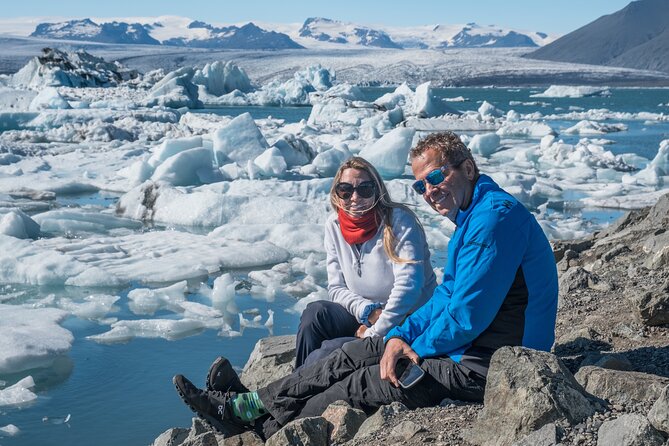
Next comes the star show for many cameras: Jökulsárlón. Here, massive icebergs broken off Breiðamerkurjökull float and grind in deep lagoon water, with seals frequently seen. You can also do kayaking or a boat between icebergs as an option, so you can choose whether you want to stay on shore or get closer to the ice.
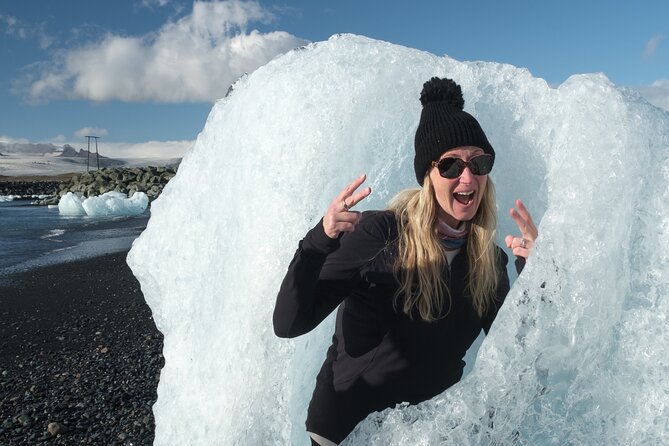
Then you land at Diamond Beach, described as a black sand beach with icebergs. This is where the visual contrast of pale ice and dark sand turns into a repeatable photo pattern, especially when you get low-angle light.
You overnight in Höfn, a town known for fantastic food and a harbor. That matters because after hours of water, ice, and wind, a good meal and a real sleep set you up for the final big day.
East and South edges: Vestrahorn, Heimaey, lava fields, Sólheimasandur
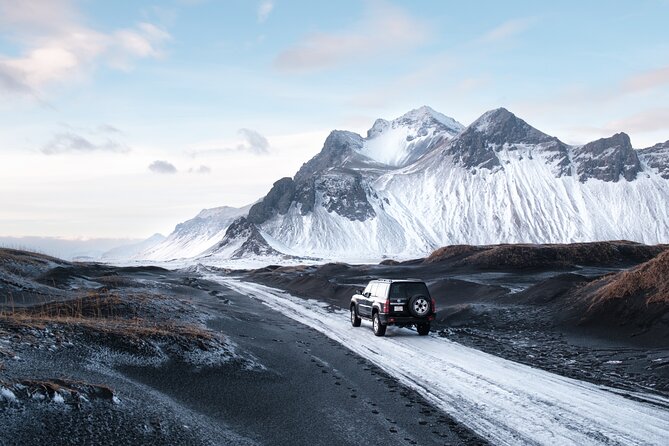
Day six brings a mix of dramatic coastline, island viewpoints, and volcanic remnants, plus one of the most famous crash sites in Iceland. You start with Vestrahorn, also called Batman mountain. It is a strong photo subject because you can frame it with black beaches and sea views, and the mountain shape holds up well whether you shoot wide or focus on texture.
Next you look toward Heimaey, with a viewpoint of an archipelago of 15 islands and 30 rock stacks off the South Coast. Heimaey is also tied to puffins, described as having the world’s largest population of nesting puffins in summer. Even if you never see a single bird, the rock stacks provide the kind of shape that looks good in bad weather too.
You visit Kvernufoss, a 30 m waterfall half-hidden in a gorge yet close to the Ring Road. The tucked-away feel is useful when you want waterfall shots that do not look like every other waterfall photo.
Then you get the big volcanic scale at Eldhraun Lava Field, described as a 565 km² lava field that flowed from the Laki fissure eruption of 1783. The description notes it as the most enormous lava flow from a single eruption since Iceland’s settlement, with at least 15 farms known to lie under Eldhraun. If you like geology, this stop changes how you think about Iceland’s present because it connects the scenery to a known eruption story.
You also stop at Svinafellsjokull Glacier, an outlet glacier of Vatnajökull and a popular place for glacier hiking, but the glacier hiking is noted as not included. If you love glacier texture and want more time on ice, you can plan around this and consider paying separately if you choose to hike.
To close the tour, you visit Sólheimasandur, the black sand area with a United States Navy DC plane crash in 1973. The crash is known because the plane ran out of fuel and came down on the beach. If you are into moody, cinematic photography, this stop can be a memorable final chapter, especially when the sky matches the story.
Price and logistics: what $9,299 for up to 8 really buys
The headline price is $9,299 per group for up to 8 people, which changes the math fast depending on how full your group is. You also get private transportation plus included guidance, bottle water, Icelandic snacks, and photography services, so you are not paying separately for vehicle time, basic support, or the photo help.
The value gets better if you care about photos enough to want someone to help you pick spots and timing. That includes the ability to shoot more confidently at iconic scenes like Kirkjufell, and less time figuring out logistics when the weather flips.
It is also worth noting what is not included. Accommodation and meals are not included, and that means you should plan those costs into your overall trip budget. Some attractions list admission as included, and many are free, but you should still expect to handle your own lodging and daily meals.
The tour is designed for a private group, and that matters because the day can feel smoother when everyone is working from the same plan. If your group includes different energy levels, private routing can help reduce the stress that comes from waiting around or sprinting between viewpoints.
Weather, timing, and how to pack for northern lights nights
This experience requires good weather, and Iceland weather can turn plans into detours quickly. If night sky viewing is part of your goal, you should be ready for conditions to decide what you actually see, since nature has the final vote.
For photography, you will want to think about low-light readiness if you are chasing aurora-style results. Even when the northern lights do not show up, you are still shooting dramatic landscapes, steam, waterfalls, black sand, and ice, so bring gear that can handle cold fingers and misty air.
Pack for long outdoor hours. Layers are more useful than one warm item, and you will likely appreciate a rain layer for waterfall days like Seljalandsfoss and Skógafoss, where getting wet is part of the experience.
A practical tip from the tour vibe: keep your camera and lenses protected and reachable. When you are at places with fast-changing light, you do not want to be digging through bags while the sky moves on.
Should you book this Ultimate Iceland Tour?
If you want the Iceland checklist plus real photo support, I think this is a strong match. The private group size up to 8, the included guidance, and the photography services add up to a trip where you actually leave with better images and fewer logistics headaches.
Book it if you care about getting specific shots at places like Kirkjufell, Jökulsárlón, and Vestrahorn, and you want someone to help manage timing across long driving days. It is also a good fit if your group values flexibility and a guide who can adjust the day so everyone has a good time.
I would hesitate if you hate packed schedules or you expect the tour to hand you guaranteed northern lights. Iceland can be tough, and this tour is weather dependent by design.
FAQ
How many people are in the group?
The tour is private, and it is for up to 8 people per group.
Is this a private tour or shared?
It is a private tour/activity. Only your group participates.
Where does the tour start, and what time does it begin?
It starts in Reykjavik, with a start time of 9:00 am.
Is pickup offered?
Yes, pickup is offered.
What language is the tour offered in?
It is offered in English.
What is included in the price?
Included items are bottle water, photography services, guidance, Icelandic snacks, and private transportation.
Are accommodation and meals included?
No. Accommodation and meals are not included.
Are entrance fees included for attractions?
Admission ticket details vary by stop. Some places are listed with admission included, while many other stops are listed with admission free.
Is glacier hiking included?
Svinafellsjokull glacier hiking is noted as not included.
What is the cancellation policy?
You can cancel for a full refund up to 24 hours in advance of the experience start time. If the experience is canceled due to poor weather, you will be offered a different date or a full refund.
Who runs the experience?
The experience provider is Luke EM.
More Tours in Reykjavik
More Tour Reviews in Reykjavik
More Aurora Hunts We Have Reviewed
More Reykjavik write-ups from our desk
- Private Transfer from Reykjavik to Reykjavik Airport KEF by Sedan
★ 5.0 · 3 reviews - Northern Lights in Mini Bus, Photos, Hot Cocoa and Pastries
★ 5.0 · 3 reviews - Exclusive Westman Islands Adventure – A Private Day Tour
★ 5.0 · 3 reviews - Private South Coast tour with Glacier walk
★ 5.0 · 3 reviews - Borgarfjörður
★ 4.5 · 3 reviews - SOUTH COAST : The Discovery
★ 5.0 · 3 reviews
Northern Lights Tours, compared.
 ★ 4.1Northern Lights Bus Tour from ReykjavikFrom $7311,161 reviews
 ★ 4.4Small-Group Premium Northern Lights Tour from ReykjavikFrom $1072,977 reviews
 ★ 4.5#1 Northern Lights Tour In Iceland from Reykjavik with PRO photos2,887 reviews
 ★ 4.5Northern Lights Small-Group Tour with Hot Chocolate & PhotosFrom $1722,068 reviews
 ★ 3.5Northern Lights Night Tour from ReykjavikFrom $631,921 reviews
 ★ 4.0Northern Lights Bus Tour from Reykjavik with Hot ChocolateFrom $761,782 reviews
 ★ 3.7From Reykjavik: Northern Lights Tour with Lifetime GuaranteeFrom $731,578 reviews
 ★ 4.4Reykjavik: Northern Lights Yacht TourFrom $931,253 reviews
Browse the lists this tour appears in