
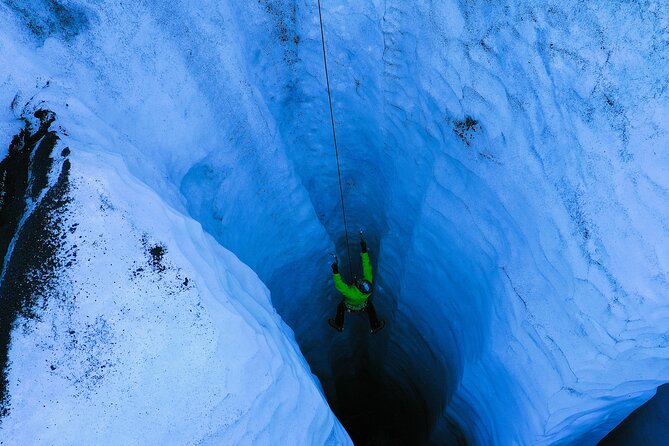
Review · GLACIER HIKES & ICE CLIMBING
Micro group – Ice climbing at Sólheimajökull
Ice climbing on a glacier is hands-on adventure. At Sólheimajökull near Vik, you trade easy viewing for a real guided session where you learn how to move safely on ice, with a micro group size that keeps things personal. I especially like the way the day is built around a thorough safety briefing and then getting you out on the glacier quickly.
What really wins me over is the practical instruction focus, from gearing up to how to handle your steps while crossing crevasses and moulins. One thing to consider first, though: you only get the climbing hardware, not clothing or boots, and the experience depends on good weather.
In This Review
- Key Highlights You Can Plan Around
- Starting at Sólheimajökull: Gear Up Fast, Then Step Out
- The Glacier Walk-In: Why the First 15 Minutes Matter
- Crossing Crevasses and Moulins: Learning Glacier Basics Safely
- Choosing Where You Climb: Starting From a Crevasse or Moulin
- Climbing Techniques That Feel Practical, Not Theoretical
- Trying Different Difficulty Levels in One Session
- Gear Included: What You’re Covered For, and What You Need to Plan
- Weather and Rescheduling: The One Thing That Can Change Your Plan
- Who This Ice Climbing Tour Is Best For
- What I’d Consider Before You Book
- Should You Book the Micro Group Ice Climbing at Sólheimajökull?
- FAQ
- Where does the micro group ice climbing tour start?
- How long does the ice climbing experience last?
- How much does the tour cost?
- What language is the tour offered in?
- What climbing gear is included?
- Are clothing or boots included?
- What physical fitness level is recommended?
- What is the group size limit?
- What happens if the weather is poor?
Key Highlights You Can Plan Around
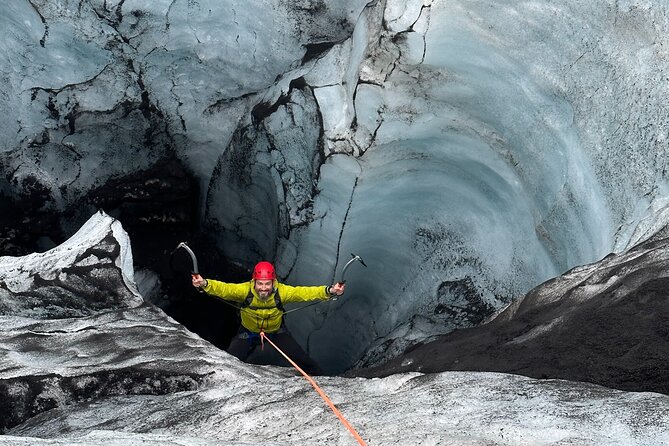
- Micro group size (max 4): more hands-on attention and less time waiting around.
- Safety briefing before you climb: clear prep right at the start, not after you’re already on the ice.
- Gear included: crampons, harness, ice axes, and a climbing belt take the hassle out of renting.
- Crossing crevasses and moulins: you’re not just posing on the ice, you’re learning glacier basics.
- Different difficulty options in one session: you have a chance to try more than one style of climb.
- Sólheimajökull is weather-driven: if conditions are poor, you’ll be rescheduled or refunded.
More crampon days, from gentle walks to roped climbs
Starting at Sólheimajökull: Gear Up Fast, Then Step Out
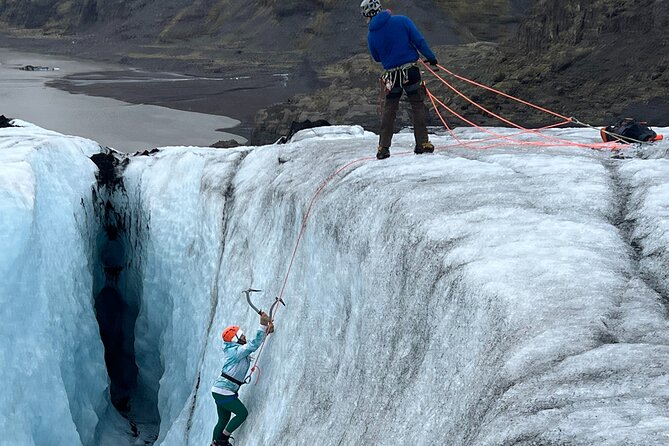
Your day begins at the Sólheimajökull meeting point in Vik, Iceland, at the parking area listed as Sólheimajökull, 871, Iceland. Expect a quick but serious start: once everyone gathers, you take about a 15-minute walk to the glacier’s tongue. That short transfer matters because it helps you settle in, meet your guide and group, and get ready without feeling rushed.
Right away, you get a safety briefing and help gearing up. This is one of those small details that changes the whole vibe. Instead of figuring things out on your own, you start with the basics, then the guide moves you into the real action.
It’s also a nice setup for travelers who do not want a huge group day. With a maximum of 4 travelers, you typically get more individual coaching. That matters a lot on ice, where small adjustments in stance and movement can make you feel instantly more confident.
The Glacier Walk-In: Why the First 15 Minutes Matter
The 15-minute walk to the glacier’s tongue sounds simple, but it sets expectations. You’re transitioning from “standing on land” to “standing on a surface that can be unpredictable,” and that mental shift is real. You’ll likely be thinking about how your weight transfers, how your crampons bite, and what your guide wants you to do with your body.
This is also when you’ll see how your guide plans the route. You’re heading toward a point where you’ll do technique practice and then start climbing. Even though the session is only about 4 hours, you’ll feel like you’re following a structured arc, not just a random walk on ice.
One practical note for planning: this tour includes climbing equipment, but the essentials you wear yourself are on you. The tour does not include boots or clothing, so you want to be ready for cold, wet conditions. If your clothing is just okay, you’ll notice it within minutes.
Crossing Crevasses and Moulins: Learning Glacier Basics Safely
Once you’re on the glacier, you’ll cross crevasses and moulins. Those words can sound scary if you’re new, but the point of this trip is that you’re not thrown into danger. The guide leads the way and you learn the movement habits needed to stay steady.
Here’s what I like about this part: it turns glacier sightseeing into glacier education. You get to experience the glacier as a living system with cracks and openings, rather than treating it like a flat frozen sheet.
You’ll also learn how to pick your moves in an environment where the ground is not uniform. The guide will explain techniques and then show you how to move back on the ice, so you can get the best out of the experience. That combination of explanation plus real practice is what makes the day feel like progress.
Even with a good guide, you should go in knowing that physical comfort on ice is part of the deal. A moderate physical fitness level is recommended. That doesn’t mean you need to be an athlete, but you do need to be able to walk, stand, and focus while wearing crampons and moving over uneven ice.
- Reykjavik: Jokulsarlon Glacier Lagoon Full-Day Guided Trip★ 4.7 · 3,302 reviews
- South Coast Classic: Full-Day Tour from Reykjavik★ 4.6 · 2,457 reviews
- From Vik: Katla Ice Cave and Super Jeep Tour★ 4.6 · 2,110 reviews
- From Vik: Katla Ice Cave and Super Jeep Tour★ 4.6 · 1,310 reviews
- Lava Show Vik Admission Ticket★ 5.0 · 1,177 reviews
Choosing Where You Climb: Starting From a Crevasse or Moulin
At some point during the glacier time, you’ll move to a spot where the guide sets up a starting point, using a crevasse or moulin as the focal area. That detail is important because it explains how the climbing section is integrated into the glacier route.
Instead of treating climbing and walking as two separate worlds, the guide links them. You might cross to the right area, then begin climbing practice from a structure that matches the technique being taught. This helps you understand why your steps matter and how your body position affects balance.
If you like learning by doing, this approach is exactly the right format. You get to connect the dots fast, because you’re practicing in the same environment where you’re already walking.
Climbing Techniques That Feel Practical, Not Theoretical
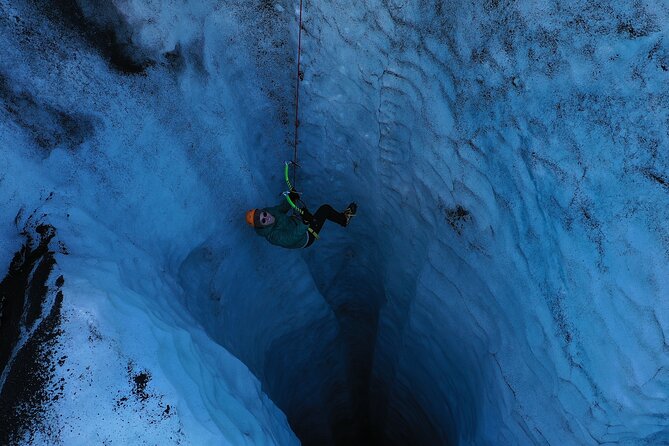
The key value of this ice climbing experience is the instruction style. You don’t just get gear and a route. You get a lesson on climbing techniques and how to move effectively on the ice again, so you can get the most from the time.
Because the tour is run by Hyperborea Tours, and because it’s designed for a micro group, the teaching tends to match the size of the group. With only up to four people, the guide can likely spot where you’re struggling and adjust the way they explain. That’s a big deal in ice climbing, where a simple cue can help you lock in balance quickly.
You should also expect that the day is built to keep you active. The guide will help you gear up at the start, then you’ll move from walking to technique practice to climbing. The rhythm matters. If you spend most of the trip standing still, confidence does not build the same way.
And based on how the experience gets rated, this is exactly the part people latch onto. In the feedback, the guides are described as great, experienced, and very accommodating, and that usually points to strong on-ice communication. You want a guide who can keep things fun while also being clear about what you should do next.
Trying Different Difficulty Levels in One Session
One of the more interesting parts of the format is that the guide may explore different locations during the day. The goal is to give you the chance to try out different levels of difficulty.
That matters for two reasons. First, it prevents the “one-size-fits-all” problem. If you’re feeling confident, you can likely try something a bit more challenging. If you’re cautious, you still get a meaningful session without being pushed into something that’s clearly beyond your comfort.
Second, it gives you variety in a short trip. Four hours goes fast. If the climbing were only one setup, the whole experience could feel repetitive. By changing locations, you get the sense that you’re learning multiple ways the glacier changes how you move.
This also makes it easier to enjoy the day even if your comfort level varies. Maybe you’re great with the walking portion but less sure with climbing. Or the reverse. You still have time in the session for the guide to guide you through what fits.
Gear Included: What You’re Covered For, and What You Need to Plan
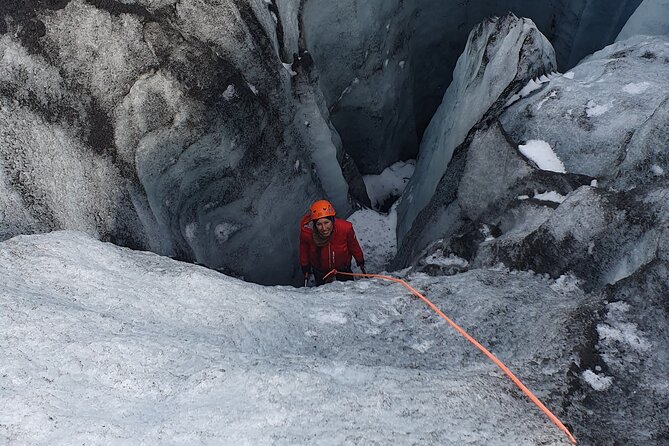
Your included gear is a major part of the value: climbing belt, ice axes, harness, and crampons. This is not a small thing. Renting crampons and climbing gear can add cost, and it’s one less stressor to manage when you arrive in Iceland.
Because this is micro group style, the guide also tends to focus on proper fit and safe use. That’s why included gear is more than convenience. Correct harness fitting and crampon placement can change how stable you feel within the first steps.
What’s not included is just as important: clothing and boots are on you. You’ll want warm layers you can move in, and boots with the grip and insulation you trust. If you show up in footwear that’s only okay, you’ll feel it on the ice and your confidence will drop.
The price is $260 per person for an approximately 4-hour experience. For Iceland, this is a fair range when you consider that you get guided instruction plus key climbing equipment. It also helps that it’s max four people, so the guide time is not diluted across a huge crowd.
One practical planning detail: this is often booked about 8 days in advance, so if you have a specific day in mind, it’s smart to lock it in early.
Weather and Rescheduling: The One Thing That Can Change Your Plan
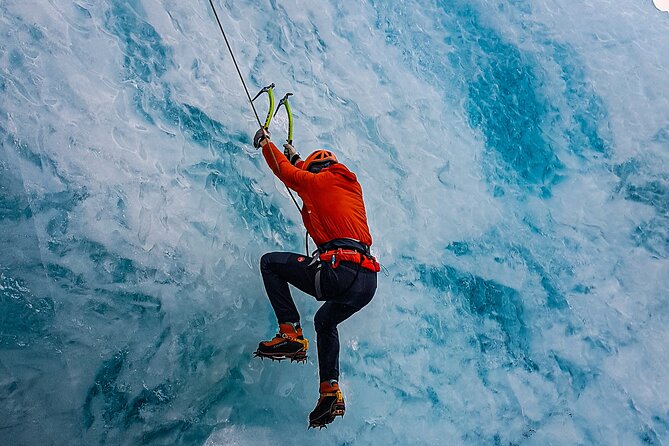
This activity requires good weather. If it’s canceled due to poor weather, you’ll be offered a different date or a full refund.
Iceland weather can shift quickly, and glacier conditions are not the place to “guess.” If conditions are not right, the responsible choice is to adjust. The good part here is that your options are clear: you either reschedule to a workable day or you get your money back.
This is also why I like doing glacier activities earlier in your overall trip window. If one day gets messy, you still have buffer to try again without scrapping your entire itinerary.
Who This Ice Climbing Tour Is Best For
This micro group glacier climb is best for you if you want a real skill-building experience, not a quick photo stop. You’ll get technique guidance for moving on ice again, plus climbing practice in a guided, structured way.
It’s also ideal if you:
- Prefer small-group experiences for more hands-on coaching
- Enjoy learning with your body, step by step
- Want a memorable Vik excursion that feels more active than sightseeing
It’s not ideal if you:
- Hate cold, wet conditions and do not have proper clothing and boots ready
- Struggle to handle moderate physical activity while staying focused
- Are unwilling to plan around weather-driven changes
What I’d Consider Before You Book
This is one of those tours where preparation boosts your enjoyment fast. Bring the clothing and boots you actually trust. Plan your day so you are not running between activities in a stressed panic. And mentally expect a hands-on session where you’ll concentrate on balance and movement.
I also find it helpful that the reviews highlight the guide experience. People consistently describe the guide as great, skilled, and accommodating, and that’s exactly what you want when you’re on crevasse country ice.
Finally, if you’re flexible about timing, this can work well even on shorter notice. Some people in the feedback booked last minute and still had a standout day. The caveat is weather, so have backup flexibility if you can.
Should You Book the Micro Group Ice Climbing at Sólheimajökull?
Yes, if you want an ice climbing experience that feels personal, structured, and instruction-heavy. The max 4 travelers format, included crampons and axes, and the focus on climbing technique and safe movement are the big reasons this tour earns strong marks.
Book it if you’re the kind of traveler who wants more than a viewpoint. You’ll get real glacier time, learn how to move on ice, and have a chance to test different difficulty levels within the same half-day window.
Skip it or think twice if you don’t have proper boots and cold-weather clothing, or if the idea of walking and climbing on uneven ice stresses you out. In that case, you might be happier with a more passive glacier activity.
If you’re ready to learn, dress smart, and go with the flow of glacier conditions, this is a great way to turn Sólheimajökull into a genuine skill moment, not just a stop on the map.
FAQ
Where does the micro group ice climbing tour start?
The tour starts at Sólheimajökull, 871, Iceland, in the meeting point area.
How long does the ice climbing experience last?
It runs for about 4 hours.
How much does the tour cost?
The price is $260.00 per person.
What language is the tour offered in?
The tour is offered in English.
What climbing gear is included?
The tour includes a climbing belt, ice axes, a harness, and crampons.
Are clothing or boots included?
No. Clothing and boots are not included.
What physical fitness level is recommended?
A moderate physical fitness level is recommended.
What is the group size limit?
The maximum group size is 4 travelers.
What happens if the weather is poor?
This experience requires good weather. If it’s canceled due to poor weather, you’ll be offered a different date or a full refund. You can cancel up to 24 hours in advance for a full refund.
More Tour Reviews in Vik
Glacier Walks and Climbs Nearby
More Vik write-ups from our desk
- Private Ice Climbing on Sólheimajökull
★ 5.0 · 3 reviews - Highland Snowmobiling Tour in Southern Iceland
★ 5.0 · 3 reviews - Easy Hike on Sólheimajökull Glacier
★ 5.0 · 3 reviews - Exclusive Ice Climbing Experience on Sólheimajökull
★ 5.0 · 3 reviews - Þórsmörk Buggy Adventure Tour in Southern Iceland
★ 5.0 · 4 reviews - Hvolsvöllur: Private Thorsmork Guided Day Hike by Super Jeep
★ 5.0 · 4 reviews
Glacier Hikes & Ice Climbing, compared.
 ★ 4.8Reykjavík: South Coast Waterfalls, Black Sand & Glacier TourFrom $12611,030 reviews
 ★ 4.5Skaftafell: Ice Cave Tour and Glacier HikeFrom $1651,746 reviews
 ★ 4.8Reykjavik: Glacier Hike, Waterfalls and Black Sand BeachFrom $1861,285 reviews
 ★ 4.7Sólheimajökull: Guided Glacier HikeFrom $1161,123 reviews
 ★ 4.7Skaftafell: Blue Ice Glacier Hike on VatnajökullFrom $1161,045 reviews
 ★ 5.0From Reykjavik: Glacier Hike, South Coast and Waterfalls Day Trip915 reviews
 ★ 5.0Glacier Hike and South Coast Small-Group Tour from ReykjavikFrom $205827 reviews
 ★ 5.0Sólheimajökull Glacier Hike – Adventure in a Small GroupFrom $115799 reviews
Browse the lists this tour appears in