
Review · REYKJANES PENINSULA TOURS
Reykjanes Peninsula Tour
You can feel Iceland’s engine at work here. This private Reykjanes Peninsula tour packs geology and rugged coast stops into about 5 hours. Pickup is offered from most Reykjavik hotels, and the whole experience is limited to your group, so you are not shuffled around in a crowd.
Two things I really like: the route hits the peninsula’s key geothermal highlights, and the timing is built for short, efficient viewing stops (about 30 minutes each, plus longer time for the Blue Lagoon). One consideration before you book: Blue Lagoon entry is not included, and you will need to pre-book it separately.
In This Review
- Key things to know before you go
- Why the Reykjanes Peninsula feels different from the rest of Iceland
- Price and logistics: what $929 per group really means
- Start in Reykjavik with pickup, then go straight to the geology
- Bridge Between Continents: a quick stop with a big story
- Krýsuvík and Seltún: mud pots, fumaroles, and a boardwalk over heat
- Reykjanesviti Lighthouse: Iceland’s old light, repaired after a quake
- Kleifarvatn Lake: the geothermal water that invites brave swimmers
- Gunnuhver Hot Springs: the steam spectacle that steals the show
- Blue Lagoon: why it is worth the add-on, and how to plan the cost
- Guide quality makes the day: Thorir and Siggi style, plus one caution
- What to pack and how to pace a half-day like this
- Who should book this Reykjanes Peninsula tour
- Should you book this tour?
- FAQ
- How long is the Reykjanes Peninsula Tour?
- What is the group size for this private tour?
- Do I get pickup in Reykjavik?
- Is Blue Lagoon included in the tour price?
- How much time is spent at the Blue Lagoon?
- Are admission tickets included for the other stops?
- What language is the tour offered in?
- What is the cancellation policy?
- What weather requirements apply?
- Are service animals allowed?
Key things to know before you go
- Private group of up to 3 means more control over pace and viewpoints.
- Most stops are free to enter, with the big add-on being the Blue Lagoon.
- Pickup from many Reykjavik hotels keeps the start simple.
- Boardwalk viewing at Krýsuvík and Seltún helps you watch the steaming ground safely.
- Gunnuhver Hot Springs is the raw geothermal showstopper on the itinerary.
- Blue Lagoon time is set at about 2 hours, so you can plan the rest of your day.
Lava and steam, twenty minutes from the runway
Why the Reykjanes Peninsula feels different from the rest of Iceland
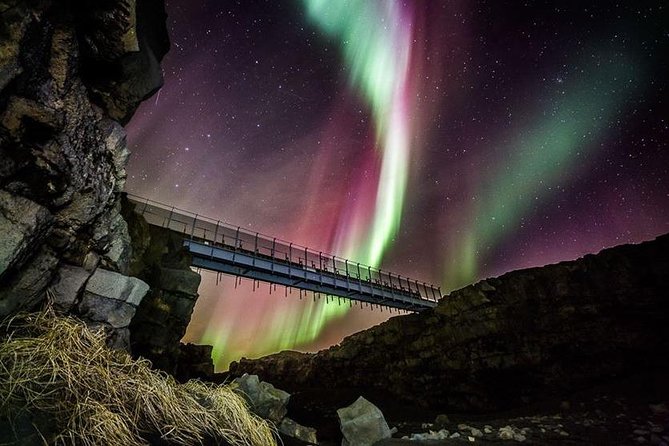
If you only have time for the Golden Circle, you miss something special. The Reykjanes Peninsula is where Iceland’s geology looks less like a postcard and more like a working factory. You will be surrounded by steam vents, mineral color, and active ground, with constant reminders that the North Atlantic is still pulling tectonic plates apart.
What I like about the way this tour is structured is that it gives you variety without long detours. You get the human-scale experience of walking a short path or standing at a lookout, then you move on while the effects of wind and weather have not totally worn you down. It is a smart half-day plan for people who want big natural impact without spending the entire day in a bus.
And since it is limited to your group, you get the benefit of a smaller rhythm. That matters on a peninsula where visibility can change fast, and where a guide can shift priorities if the weather turns.
Price and logistics: what $929 per group really means
This tour is priced at $929.00 per group, up to 3 people, for about 5 hours. That pricing is the first thing to pencil out, because it changes how good the value feels.
- If you go as a group of 3, it works out to about $309 per person for the tour itself.
- If you go as a couple, it is about $465 per person.
- If you go solo, you still need a full group price in most private setups, so it can feel pricey.
Then comes the Blue Lagoon cost. Entry to the Blue Lagoon is listed as not included, at $150.00 per person, and you must pre-book it. So your total day cost is the tour price plus Blue Lagoon entry for whoever is using the lagoon.
The trade-off is that you are paying for a private guide and private transfer time across multiple major geothermal stops. You are also not spending your energy figuring out routes, parking, and timing. In Iceland, that is often where money turns into comfort.
Start in Reykjavik with pickup, then go straight to the geology
You start at Harpa, 101 Reykjavík, unless pickup from your Reykjavik hotel is offered for your exact location. The tour ends back at the meeting point, which is helpful if you are trying to keep your schedule tight in the city.
You also get a mobile ticket, and the tour runs in English. Service animals are allowed, and most travelers can participate. One more small but useful detail: the tour says it requires good weather. That is not just legal fine print, it is a heads-up that visibility and safety around geothermal sites are weather-dependent.
Your guide is described as experienced, and based on guide names shared with previous customers, you may end up with Thorir or Siggi. Both are described as responsive, and that matters because Reykjanes conditions can change quickly.
- Reykjavik: Golden Circle Full-Day Tour with Kerid Crater★ 4.8 · 24,485 reviews
- Reykjavik Food Walk – Local Foodie Adventure in Iceland★ 5.0 · 18,952 reviews
- Reykjavík: South Coast Waterfalls, Black Sand & Glacier Tour★ 4.8 · 11,030 reviews
- Reykjavík: Whale Watching and Marine Life Cruise★ 4.6 · 9,838 reviews
- Reykjavik: Sky Lagoon Entrance Pass With 7-Step Spa Ritual★ 4.8 · 6,166 reviews
Bridge Between Continents: a quick stop with a big story
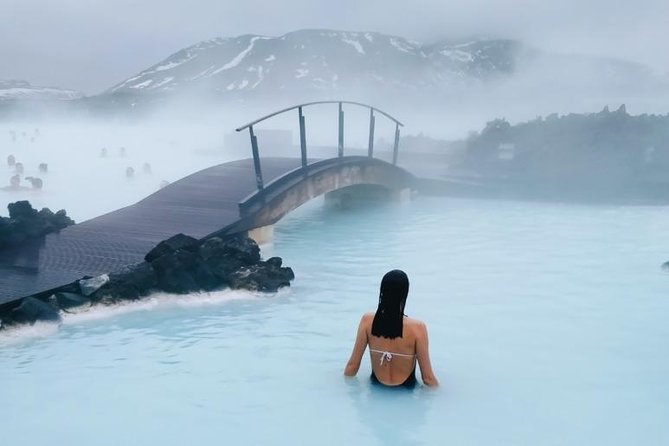
The first stop is the Bridge Between Continents. This is one of those places where the setting is simple, but the idea is wild. It is a spot where you can stand where the North American and Eurasian tectonic plates meet. The itinerary says the stop time is about 30 minutes, and admission is free.
What makes this stop valuable is the contrast it creates. After a day in Reykjavik, you step into a location where Iceland’s movement becomes physical. You will get the kind of story you can share back home, but you also get the payoff of standing in the actual place rather than learning about it from behind glass.
Consideration: it is outdoors. If you have strong wind or driving rain, your best plan is to wear layers you can adjust and accept that you might spend less time taking photos and more time just enjoying the moment.
Krýsuvík and Seltún: mud pots, fumaroles, and a boardwalk over heat
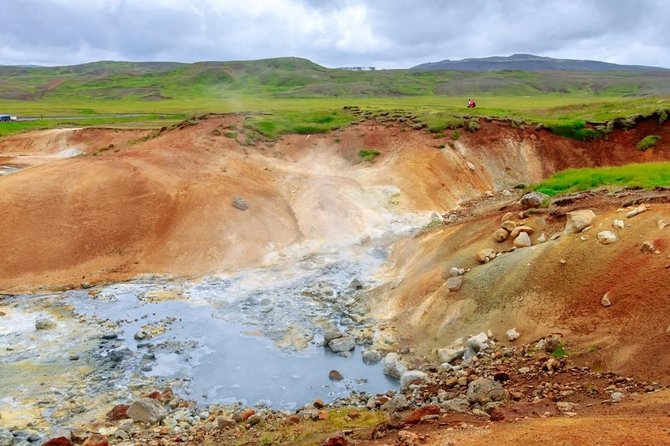
Next you go to Krýsuvík and Seltún, one of the peninsula’s most iconic geothermal areas. The tour time is about 30 minutes, with free admission.
Here is what to expect once you arrive: the area is famous for seething mud pots and active fumaroles with steam rising from the ground. The itinerary also points out that there is a boardwalk designed for safe viewing, which is exactly what you want around geothermal terrain.
A standout detail is the explanation of depth and cause. The information given says that just 4 km below the groundwater, conditions turn water into steam. That depth detail helps the whole experience click, because it turns what looks like chaos into a system. You start seeing the geothermal sites as a chain of energy moving up from below, not just random boiling spots.
You will also notice the color around Krýsuvík: vivid red hills and mineral tones. That color is part of the attraction, but it can also make you want to stop longer. The tour’s 30-minute structure is a good balance, letting you look without rushing and without getting stuck in one spot if weather changes.
Reykjanesviti Lighthouse: Iceland’s old light, repaired after a quake
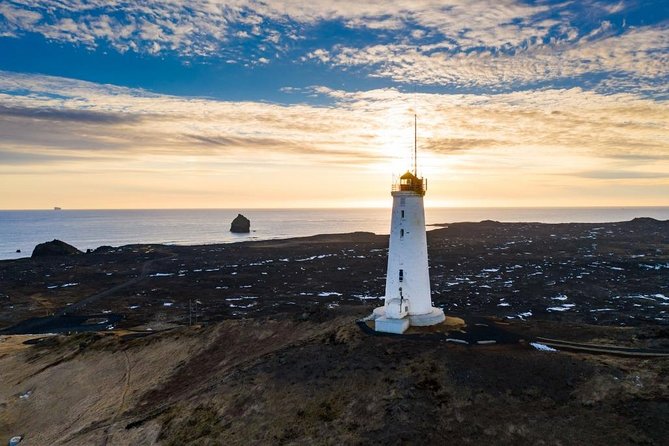
Stop 3 is Reykjanes Lighthouse, the Reykjanesviti lighthouse. It is described as one of Iceland’s oldest, built in 1878, and standing 31 m (about 102 ft) tall. It suffered major damage in the earthquake of 1905, then was rebuilt and moved to a safer location in 1929.
The stop is about 30 minutes, with free admission.
This is a nice change of pace from geothermal steam. You get something human and historical, tied to how people navigated rough seas. The itinerary says a survey among Icelanders picked this lighthouse as their favorite, and that gives you a reason to pay attention beyond the photo angle.
Practical note: like the Bridge Between Continents, this is outdoors. Wind protection helps. Also, lighthouses are simple geometry, so bring your eyes more than your camera. The story behind it is the real value.
Kleifarvatn Lake: the geothermal water that invites brave swimmers
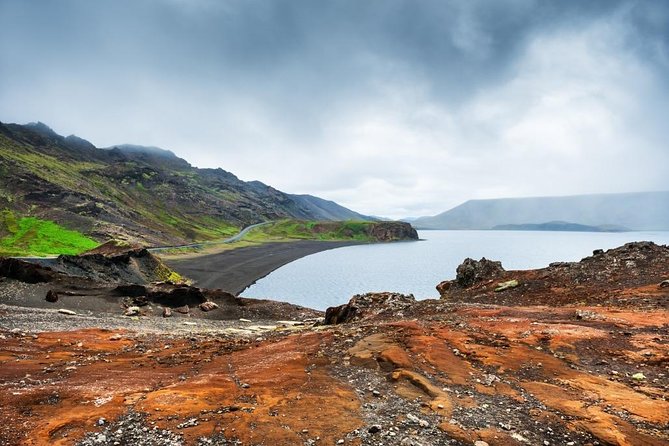
Stop 4 is Kleifarvatn Lake. The itinerary frames it as exciting for brave snorkelers and divers, with geothermal springs inside parts of the lake.
The stop time is about 30 minutes, with free admission.
What you can take from this stop, even if you are not snorkeling or diving, is the sense that water here is part of the geothermal system. The tour also mentions mythology tied to the area and suggests you might catch sight of a legendary creature. The big takeaway is tone: Reykjanes is not just science, it is storytelling too.
Consideration: if you are expecting a long walk or a full activity, this is more of a viewing and curiosity stop than a guaranteed water session. Keep your expectations realistic, especially on colder or windy days.
Gunnuhver Hot Springs: the steam spectacle that steals the show
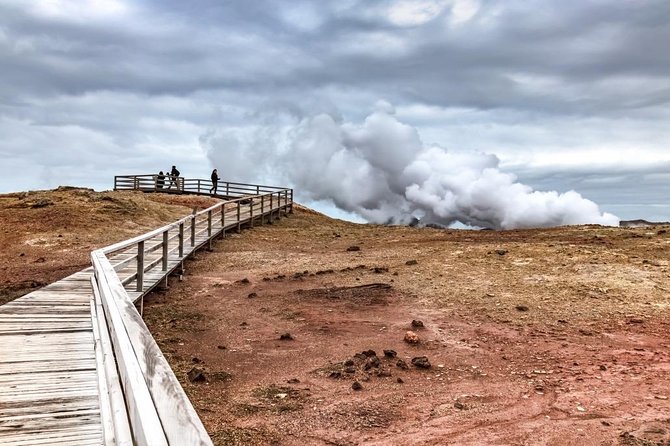
Stop 5 is the main visual hit for many people: Gunnuhver Hot Springs. This geothermal field is described as enormous and restless, with hot mud pools, steaming vents, and furious fumaroles. The itinerary emphasizes that you can see the steam from many kilometers away, so you start building the mental picture long before you reach it.
The stop is about 30 minutes, with free admission.
What makes Gunnuhver worth it is the mix of scale and sensory intensity. You will likely notice mineral-painted ground, colorful rocks, and clouds of steam rising from vents. Even if you have seen geothermal sites before, this is the kind that makes you pause, because it feels more forceful and raw than the more manicured attractions.
Practical advice: dress for cold wind and hot steam at the same time. In geothermal areas, you can feel warm near vents but still be chilly standing back from them. Bring layers that keep wind off your core, and keep an eye on where you are walking, since you want to stay on safe paths.
Blue Lagoon: why it is worth the add-on, and how to plan the cost
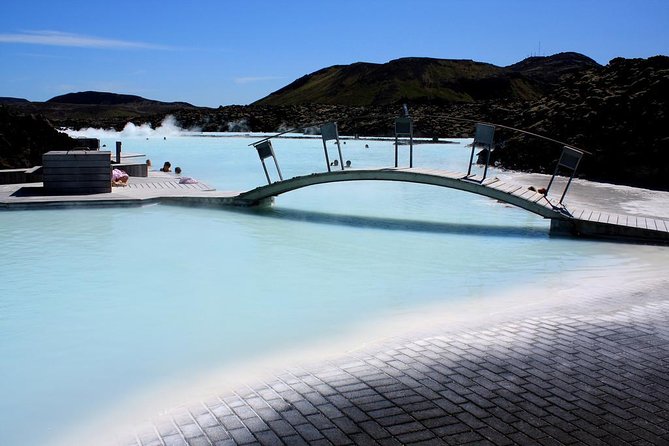
Finally, the tour reaches the Blue Lagoon, with about 2 hours on site. This is where the day can shift from rugged science to spa comfort.
Key point: Blue Lagoon entry is not included in the tour price. The provided cost is $150.00 per person, and you must pre-book.
If you have never been, here are the facts that make the place feel less random and more intentional:
- The lagoon is man-made, built in a lava field.
- The water is taken from deep underground, described as coming from a depth of 2000 meters.
- The lagoon water sits around 37 to 40°C (about 98 to 104°F).
- The lava field is said to be about 800 years old.
- The blue color comes from silica, and the water is described as a mix of freshwater and seawater rich in minerals.
- The water supply is renewed about every 40 hours.
- You can find features like an in-water cave, a warm waterfall, and an in-water bar where drinks are available.
- It is known for helping people with psoriasis or other skin ailments, according to the information provided.
In wintertime, the description also notes there may be a chance to see the Northern Lights in the sky, but of course, auroras are never guaranteed. Still, if you are visiting in cold months, it is a fun way to aim for a memorable scene.
Blue Lagoon packages are listed as Basic, Comfort, and Luxury. The tour itself does not say which package you get, so think of this as your chance to choose based on your comfort level and how much time you want to spend.
Practical drawback to plan for: this is a popular attraction, so part of your value calculation is whether you want a peaceful geothermal day or a more mainstream spa stop. If you are the type who hates crowds, consider arriving ready to enjoy your time in the water rather than treating it like a photo-only mission.
Guide quality makes the day: Thorir and Siggi style, plus one caution
The biggest praise factor in the information you provided is how guides handle weather and flexibility. One example set of comments credits guides Thorir and Siggi for being highly responsive before the tour, helping plan the day based on conditions, and being willing to change plans right up to the last minute. That is exactly what you want on Reykjanes, because visibility and wind can change quickly.
That same feedback also praises the guide’s drive-time context, meaning you learn history and geology during transit, not only at the stops. If you are the kind of traveler who enjoys understanding what you are looking at, that added interpretation can make the difference between simply visiting sites and actually feeling like you understand Iceland.
Now the balanced note. One perspective you shared says the guide felt more like a chauffeur than a guide, with less spoken information than expected. So here is your best strategy: go in expecting great driving and good access to key points, but also know that the teaching style may vary. If you care deeply about commentary, it is smart to ask what kind of storytelling you should expect from the guide before the day starts.
What to pack and how to pace a half-day like this
This is a winter-ready style itinerary even if you travel in warmer months, because geothermal areas can be windy and wet.
I recommend you pack for these realities:
- Layer up. You will go from cold air to warm steam zones to spa warmth.
- Wear shoes with grip. Boardwalks and wet ground can be slick.
- Bring a small towel or quick-dry item for Blue Lagoon time, since the stop can involve soaking.
- Bring a warm hat or hood for the lighthouses and open geothermal fields.
Pacing is already handled by the tour structure. Most stops are about 30 minutes, which is enough time to see, learn, and take photos without feeling stuck. Blue Lagoon gets about 2 hours, long enough to actually enjoy the warm water rather than just “arrive, dip, leave.”
Who should book this Reykjanes Peninsula tour
This is a strong fit if you:
- Want a private Reykjanes day without the hassle of route planning and transfers.
- Like geology and want explanations that connect steam, minerals, and plate movement.
- Are traveling with a small group, since the pricing is per group up to 3.
- Care about flexibility if the weather changes.
It may be less ideal if you:
- Want a fully guided, lecture-style experience at every stop. The guide quality can matter.
- Do not want a spa add-on, since Blue Lagoon is a major feature of the day.
- Are highly sensitive to crowds, because Blue Lagoon can be busy.
Should you book this tour?
I would book it if your goal is a memorable, efficient Reykjanes Peninsula half-day with a private group advantage. The combination of the tectonic-plate stop, Krýsuvík’s steaming geothermal viewing, Gunnuhver’s steam field, and a longer Blue Lagoon soak gives you a full spectrum of Iceland without a full day commitment.
What could hold you back is budget math if your group is small, plus the separate Blue Lagoon booking and cost. If you are okay with that, the structure is practical and the stops are the kind that make Iceland feel real fast.
If you decide to go, do one extra thing to protect your experience: choose your Blue Lagoon timing early when you pre-book, and dress for wind. On Reykjanes, those two choices can turn a good day into a great one.
FAQ
How long is the Reykjanes Peninsula Tour?
The tour is listed as about 5 hours.
What is the group size for this private tour?
It is a private tour/activity limited to your group, with a maximum of up to 3 people per group.
Do I get pickup in Reykjavik?
Pickup is offered from most Reykjavik hotels. The meeting point is Harpa, 101 Reykjavík, Iceland.
Is Blue Lagoon included in the tour price?
No. Blue Lagoon entry is not included. The listed cost is $150.00 per person, and you must pre-book.
How much time is spent at the Blue Lagoon?
The itinerary lists about 2 hours for the Blue Lagoon stop.
Are admission tickets included for the other stops?
The itinerary notes admission is free for the stops at the Bridge Between Continents, Krýsuvík and Seltún, Reykjanes Lighthouse, Kleifarvatn Lake, and Gunnuhver Hot Springs.
What language is the tour offered in?
The tour is offered in English.
What is the cancellation policy?
Free cancellation is available. You can cancel up to 24 hours in advance for a full refund, but cancellations within 24 hours of the start time are not refundable.
What weather requirements apply?
The experience requires good weather. If it is canceled due to poor weather, you will be offered a different date or a full refund.
Are service animals allowed?
Yes, service animals are allowed.
More Tours in Reykjavik
More Tour Reviews in Reykjavik

Reykjanes, More to See
More Reykjavik write-ups from our desk
- Private Transfer from Reykjavik to Reykjavik Airport KEF by Sedan
★ 5.0 · 3 reviews - Northern Lights in Mini Bus, Photos, Hot Cocoa and Pastries
★ 5.0 · 3 reviews - Exclusive Westman Islands Adventure – A Private Day Tour
★ 5.0 · 3 reviews - Private South Coast tour with Glacier walk
★ 5.0 · 3 reviews - Borgarfjörður
★ 4.5 · 3 reviews - SOUTH COAST : The Discovery
★ 5.0 · 3 reviews
Reykjanes Peninsula Tours, compared.
 ★ 4.6Reykjavík: Volcano Eruption Site and Reykjanes Hiking TourFrom $1261,066 reviews
 ★ 4.8From Reykjavík: Fagradalsfjall Volcano Hike with GeologistFrom $163780 reviews
 ★ 5.0Iceland Hiking Tour to Fagradalsfjall Volcano with Local GuideFrom $189573 reviews
 ★ 4.5Reykjavik: Guided Tour to Volcano and Reykjanes GeoparkFrom $95428 reviews
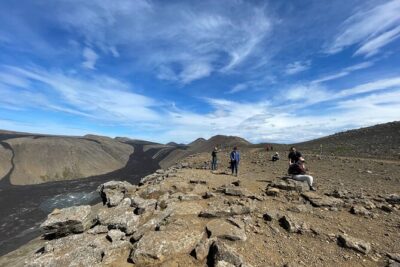 ★ 4.5Volcano Hike and Grindavík Visit from ReykjavikFrom $125120 reviews
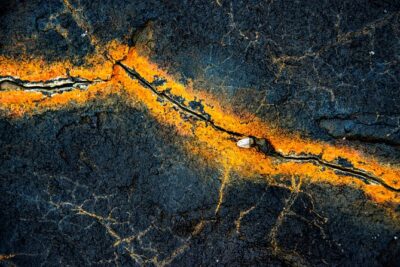 ★ 4.5Volcano Eruption Site Hike & Reykjanes Tour from ReykjavikFrom $126108 reviews
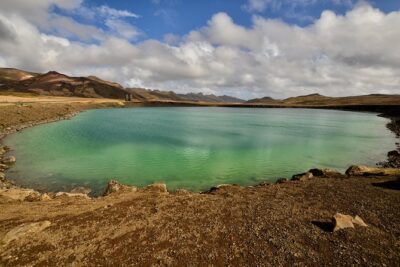 ★ 4.5Reykjanes Geopark Small-Group Tour with Airport TransferFrom $134105 reviews
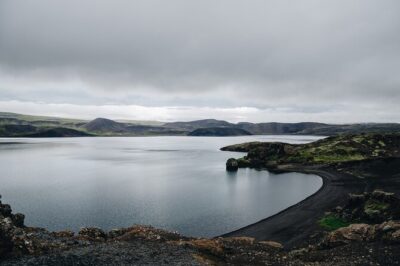 ★ 4.0Volcano Tour on Reykjanes Peninsula Including Icelandic SnacksFrom $53101 reviews
Browse the lists this tour appears in