
Review · SNAEFELLSNES PENINSULA TOURS
8 Day Winter Circle Tour, Ring Route of Iceland with Snæfellsnes Peninsula
Winter Iceland is a real-world puzzle. This 8-day winter circle tour strings together the big-ticket sights, from the Golden Circle to Vatnajökull, then finishes on the Snæfellsnes Peninsula with classic coast views. It also builds in multiple nights where you have a shot at the Northern Lights, not just a hope.
What I like most is the way the itinerary mixes famous stops with real access. You get glacier equipment included for the Sólheimajökull glacier hike and the Vatnajökull Crystal Ice Cave trip, with a super jeep ride to the cave. You are not stuck watching from far away.
One thing to consider: winter means conditions can change fast. Even with great planning, some stops are short, and Northern Lights are only possible when the sky cooperates.
In This Review
- Key highlights and what they mean for you
- 8 Days, 7 Nights, One Plan: The Winter Ring Road Value
- Day 1: Thingvellir, Geysir, and a Northern Lights Friendly First Base
- Day 2: Seljalandsfoss, Skógafoss, Reynisfjara, and Your Sólheimajökull Glacier Hike
- Day 3: Vatnajökull Crystal Ice Cave, Jökulsárlón Seals, and Iceberg Black Diamond Views
- Day 4: East Fjords Power in Small Towns, Horse Time Optional, and Egilsstaðir Hot Pools
- Day 5: Námafjall Geothermal Colors, Dimmuborgir Dark Castles, and Akureyri at Night
- Day 6: Hauganes Whale Watching, Harbors, and Grábrók Crater for Aurora Chances
- Day 7: Snæfellsnes Basalt Columns to Kirkjufell, the Arrowhead Mountain
- Day 8: Deildartunguhver Hot Power, Reykholt Sagas, and Lava Caves as an Add-on
- Price and inclusions you should actually care about
- Who this tour fits, and who should choose something else
- Should you book this 8 day winter circle tour?
- FAQ
- What time does the tour start?
- How long is the tour?
- Is pickup included?
- Is WiFi available during the tour?
- What is included for glacier activities?
- Is whale watching included?
- Are meals included?
- What are some add-ons that are not included?
- Is Northern Lights guaranteed?
- What is the cancellation policy?
Key highlights and what they mean for you
- Small group size (max 17), so you spend less time herding cats in parking lots.
- Glacier gear included, so you can focus on the route instead of hunting equipment.
- Ice cave access by super jeep, which saves a lot of winter hassle.
- Northern Lights built into where you sleep, including areas chosen to reduce light pollution.
- Whale watching from Hauganes is included, not an extra you have to budget for.
- Optional add-ons like Vök Baths and the Víðgelmir lava cave let you decide how “soak and explore” you want to be.
Iceland in miniature. Other Snaefellsnes days out
8 Days, 7 Nights, One Plan: The Winter Ring Road Value
At $679 for about 8 days, this tour is priced like a focused winter circuit, not a hand-holding luxury cruise. You get 7 nights of accommodation, an English-speaking guide, and pickup and drop-off from designated bus stops. For many people in winter, that combination is the real value, because it removes the toughest part of Iceland travel: knowing how to move day after day when roads are slick and daylight is short.
You also get practical extras that matter more than they sound. There is WiFi on board, which helps you handle navigation, maps, and your own plans for dinner after your last stop. And with a maximum group size of 17 travelers, the pace stays manageable, even when the weather makes you pause or adjust.
Do not expect a slow, linger-everywhere style. This is a route that prioritizes seeing a lot while you have winter conditions. If you like long, unstructured hikes and flexible “we will stay here until the light is perfect,” you may want a slower trip. If you want a smart winter overview with access to glaciers and Iceland’s geothermal power, this format fits.
Day 1: Thingvellir, Geysir, and a Northern Lights Friendly First Base
Day 1 starts with Thingvellir National Park, a UNESCO World Heritage site tied to the Icelandic Althingi. In winter, Thingvellir can feel extra dramatic because the mossy edges and cold air make the cracks in the ground look sharper. It is also a strong orientation stop: you get a sense of Iceland’s tectonic setting early, which makes later volcano and glacier sites easier to understand.
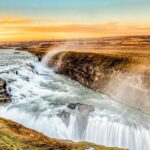
Next comes Gullfoss, the Golden Waterfalls. The melting water from the glacier Langjökull drops into a deep canyon, and in winter the water flow can look powerful and loud. This is one of those places where quick photos do not tell the full story. If you can, spend a couple extra minutes watching how spray drifts across viewpoints.
Then you hit Geysir, with Strokkur noted for erupting roughly every 7 minutes. In cold weather, the steam can make the area feel alive and very close. The practical win here is timing: you are not just “near geysers,” you are guided to where the action happens.
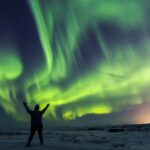
The day closes with Hvolsvollur, chosen specifically for a chance at Northern Lights because it is far from light pollution. That is important. A bright sky from towns can wash out faint auroras, so picking where you sleep is part of the tour design, not a random bonus.
Day 2: Seljalandsfoss, Skógafoss, Reynisfjara, and Your Sólheimajökull Glacier Hike
Day 2 is classic Iceland variety, packed into one drive: waterfall power, black sand drama, and then an actual glacier experience.
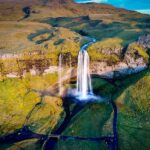
Seljalandsfoss is known for being walkable behind. In winter, that back-side walkway can feel slick and exposed, so you will want to watch your footing and keep your camera secure. Even with a short stop, it is one of those waterfalls where the “from behind” viewpoint makes it worth arriving early.
Then comes Skogafoss, where the river Skógá tumbles about 60 meters down a gorge. This one is all about scale. Even if you only get about 30 minutes, you will still feel the thunder in the air.
After that you switch to ocean mood at Reynisfjara Beach, famous for black sand and basalt columns. The waves here can be intense, and the cliff formations are why this area gets talked about so much. It is also a great reminder that Iceland’s coasts can be both scenic and serious in winter.
The highlight is Sólheimajökull Glacier for a glacier hike with a certified glacier guide. The itinerary states 3 hours and includes the glacier equipment. This matters because a “glacier hike” without gear is not really a glacier hike. With the right kit, you are there to learn and move safely on ice, not just pose at the edge.
You overnight in Vík í Mýrdal, a small village where light pollution is lower, so it gives you another shot at the Northern Lights. That is a recurring theme on this route: the tour keeps aiming you toward winter sky opportunities, not only day sightseeing.
Other Reykjavik outings that keep coming up in our notes
- From Reykjavik: 3-Day South Coast Winter Tour with Ice Cave★ 4.8 · 171 reviews
- Winter South Coast Day Tour by Minibus from Reykjavik★ 5.0 · 109 reviews
- South Coast, Glacier Hike and Northern Lights Winter Tour★ 4.4 · 66 reviews
- Winter Whale Watching and Northern Lights Cruise from Reykjavik★ 4.5 · 24 reviews
Day 3: Vatnajökull Crystal Ice Cave, Jökulsárlón Seals, and Iceberg Black Diamond Views
Day 3 is built around Iceland’s biggest ice story: Vatnajökull.
You start at Breiðamerkurjökull, where you access the Crystal Ice Cave inside the larger glacier. This is listed as 3 hours, and the tour emphasizes the “ice sculptures” carved by nature. The practical part for you is that you are not attempting a cave visit on your own. You have glacier equipment included, and there is a super jeep ride arranged for ice cave access, which reduces the winter friction that can ruin plans.
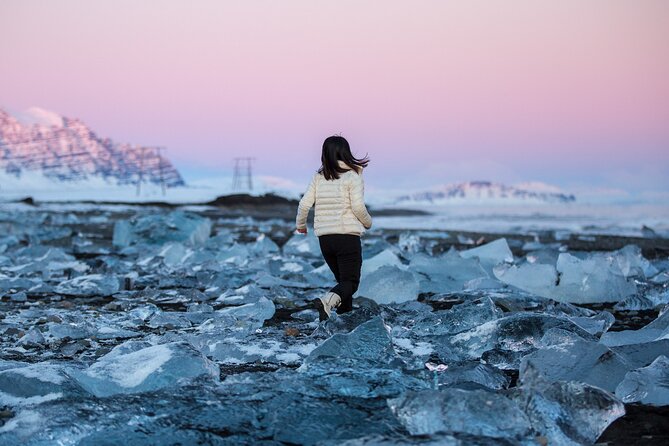
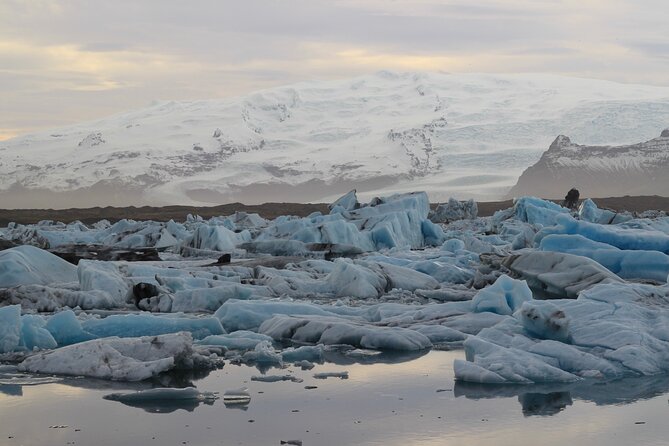
Next, Glacier Lagoon (Jökulsárlón) is one of the top attractions on the route. In winter, the tour notes hundreds of seals can be there, hunting in the lagoon. Even with a shorter stop, it is the kind of place where you watch the drifting shapes for a long time, because the icebergs move slowly and the reflections are constantly changing.
Then you visit Breiðamerkursandur, also called Black Diamond Beach. The icebergs that strand on the black sand create the diamond-looking effect. Winter adds texture here: the contrast between dark sand and bright ice can look almost unreal, and it is one of the easiest stops to enjoy even if you are tired from driving.
Finally, there is a viewpoint around Hvannadalshnjúkur at about 2,110 meters, Iceland’s highest peak. Even if you only get a brief moment at altitude views, it helps connect the landscape to the volcanic forces behind the ice.
Day 4: East Fjords Power in Small Towns, Horse Time Optional, and Egilsstaðir Hot Pools
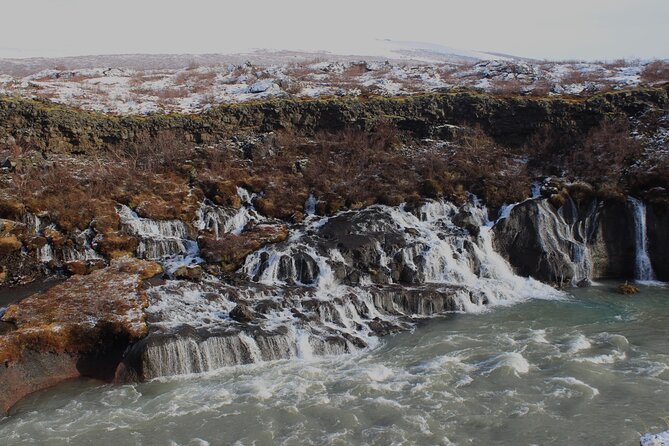
Day 4 shifts from the south to the East Fjords, and the pacing feels different. The scenery is more spread out, which can make the long winter drives feel slower and calmer.
Your first named stop is Búlandstindur, a symmetric pyramid-shaped mountain that overlooks the East Fjords as you arrive. It is a quick “wow shape” moment that frames the whole day.
Then you pass through Djúpivogur, a tiny fishing village and part of the Cittaslow movement, focused on improving quality of life by slowing down. In winter, that concept feels real. You often see fewer people, more space, and a calmer rhythm, which is exactly when a small village stop helps your brain recover.
You also stop at Hallormsstaðarskógur, described as the only largest forest in Iceland, mostly native birch wood. If you think of Iceland as treeless, this provides a reality check. Even a small patch of trees changes how cold air feels.
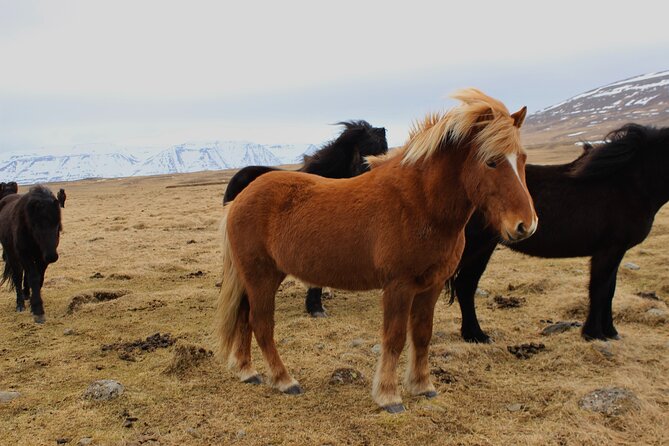
There is a Finnsstaðir horse rental opportunity for Icelandic horses. It is marked as not included, so think of it as an optional extra if you want the animal experience. The horse temperament is described as easy-going, and the guide experience is aimed at both beginners and more experienced riders.
The day ends in Egilsstaðir, with Vök Baths offered as an optional add-on. The baths are described as geothermal pools on the lake, including outdoor pools, a sauna, and a cold tunnel with a mist shower. This is the kind of winter contrast that makes Iceland feel like an actual living environment: cold air outside, warm water inside, and you might even catch Northern Lights while bathing if skies are clear.
Day 5: Námafjall Geothermal Colors, Dimmuborgir Dark Castles, and Akureyri at Night
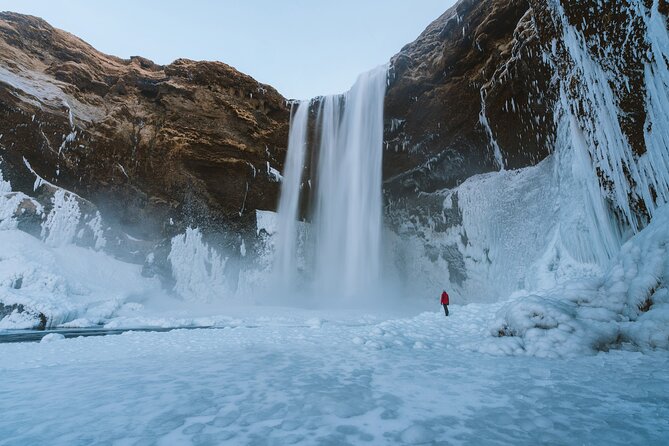
This day is about heat and history in the north, starting with Námaskarð (Námafjall) geothermal area. You are shown colorful sulphurous mud springs and steaming fumaroles, connected to the Krafla volcano fissure zone. Even if you spend only about 30 minutes, the smell and the color differences make this one of Iceland’s more sensory stops.
Then you head to Dimmuborgir, which translates to Dark Castles or Dark Cities. The key idea here is the lava field shapes, formed when lava met wet marshlands, creating bizarre rock formations. In winter light, those shapes can look even more haunted. This stop is short-to-medium duration, but it is one where your camera roll gets filled without much effort.
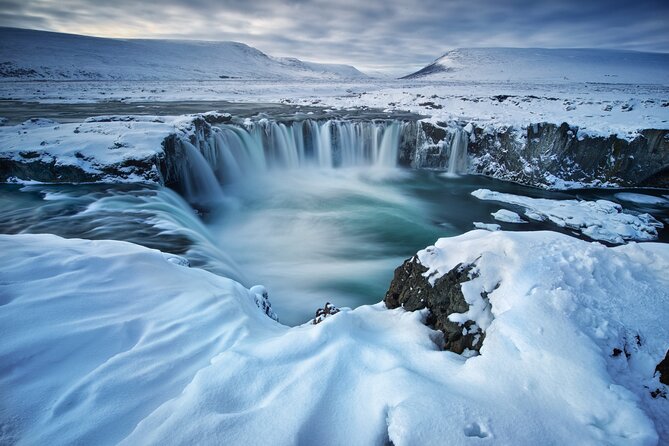
Next is Goðafoss. The name means Waterfall of the Gods, and it is also described as having history. This is one of the waterfalls where you get a sense of Iceland’s storytelling, because so much of the island’s natural sites are tied to sagas and old meanings. Expect 30 minutes, enough for photos and a slow watch of the flow.
You end with Akureyri, called the capital of the north. You get a long drive day with 10 hours in the itinerary, which likely means more time to settle in than you get in some other stops. Akureyri can be a good base for winter nights, and if cloud coverage is favorable, the tour notes a chance to see Northern Lights from the area.
Day 6: Hauganes Whale Watching, Harbors, and Grábrók Crater for Aurora Chances
Day 6 gives you wildlife, not just scenery.
You start with a couple of hours in Akureyri, described as a warm and charming town with a population around 20 thousand. One small detail worth knowing, the town has heart-shaped stop signs at traffic lights. It is minor, but those little touches are why cities feel less like “just a waypoint.”
Next is Hauganes, a small fishing village with a harbor and a black sand beach, plus tall mountains around it. This is set up as the launch point for whale watching.
The included Whale Watching tour from Hauganes takes you to Eyjafjörður Fjord, and the tour states Northern Iceland is globally recognized as one of the best places to experience whales. Duration is 2 hours and it is included, which makes it a high-value day. In winter, boat trips depend on weather, but when it runs, it is the kind of experience you remember longer than any waterfall photo.
The day ends with Grábrók Crater, a volcano crater producing moss-clad lava in its surroundings from an eruption 2,000 to 3,000 years ago. It is only about 30 minutes, but it is also noted as an excellent spot to see Northern Lights if the sky is clear. Again, the tour keeps pairing viewpoints with aurora potential.
Day 7: Snæfellsnes Basalt Columns to Kirkjufell, the Arrowhead Mountain
This is the day that turns the route west toward Snæfellsnes Peninsula, and it is packed with tight stops that each deliver a visual punch.
You begin with Gerðuberg basalt columns, an extraordinary cluster of hexagonal columns. Even 20 minutes is enough to understand why people stop here. Basalt geometry looks almost engineered, but it is pure geology.
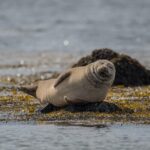
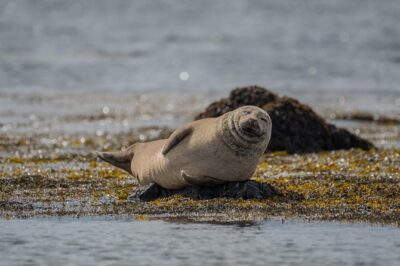
Then you go to Ytri Tunga Beach, one of the rare white sand spots in Iceland and a seal colony. The tour notes you can sometimes see seals lounging on rocks. In winter, this kind of wildlife viewing can be hit or miss, but it is a good counterpoint to glacier and waterfall days.
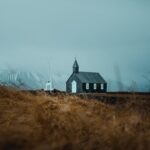
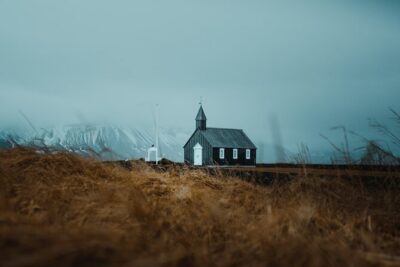
Next is Budakirkja, the black church of Búðir on the west coast. In winter, black wooden churches against pale skies and ocean can look like a postcard you did not know existed.
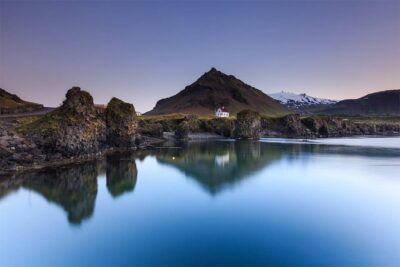
Then comes Arnarstapi, a former fishing village under Mount Stapafell. The tour frames it as a good place to stretch your legs along the coast line. Even if the stop is short, walking a bit in wind and salt air helps you reset.
At the tip you visit Snæfellsjökull, a stratovolcano. The tour notes it last erupted around 200 AD and that it is famous because Jules Verne’s Journey to the Center of the Earth uses it as an entrance to the center of the earth. Whether you read the book or not, it adds a story layer to the view.
Then you see Londrangar basalt cliffs, described as remnants of ancient basalt volcanic dikes sticking out from the sea. It is a quick stop but worth it for the ocean power effect.
Djúpalónssandur Beach is next, a small black sand beach reached by a footpath through a lava area with huge mossy volcanic towers. This is one of those walks where your boots and the uneven ground matter, and it is a nice change from purely viewpoint stops.
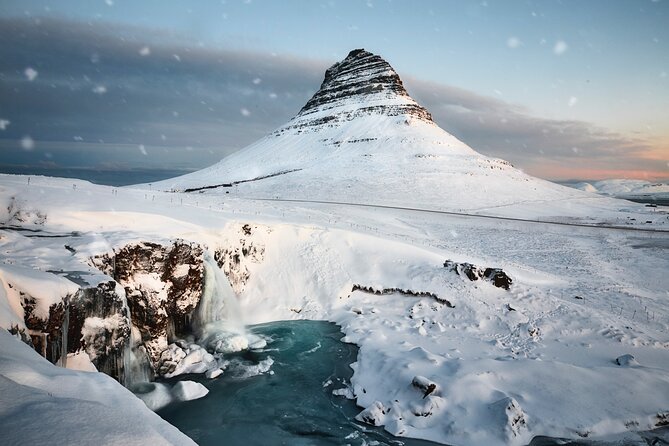
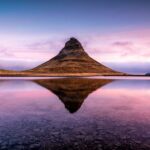
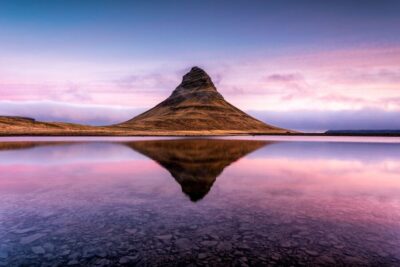
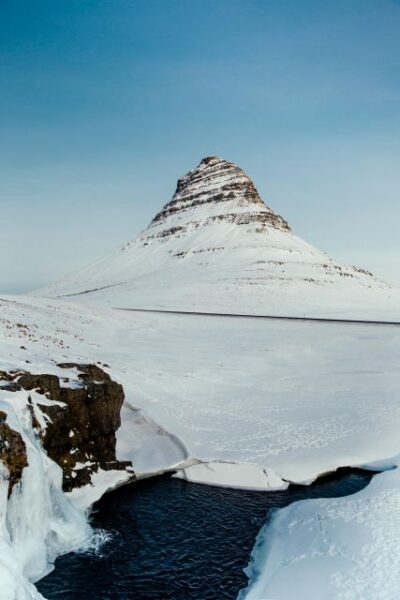
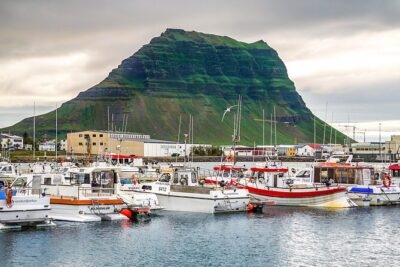
Finally, you end at Kirkjufell, the photogenic Church Mountain. The tour notes it is among the most photographed mountains on the island and that it was used as the Arrowhead Mountain in Game of Thrones. For practical photos, Kirkjufell is one of the places where even short light windows still look good.
Day 8: Deildartunguhver Hot Power, Reykholt Sagas, and Lava Caves as an Add-on
Your last day starts with Deildartunguhver Thermal Spring, described as the largest and most powerful hot spring in Europe, producing about 180 liters per second of 100 Celsius water. That number gives you a sense of scale. Even a short visit feels like you are watching energy in real time.
Then you stop in Reykholt, a tiny village and important historical cultural center. The tour highlights that Snorri Sturluson lived there from 1206 to 1241. This is a calm stop compared to glaciers and coasts, and it gives you a break from the constant motion.
Next you visit Hraunfossar Lava Waterfall. The tour describes rivulets streaming over about 900 meters from the Hallmundarhraun lava fields. Unlike many waterfalls that are a single drop, Hraunfossar spreads the action out. In winter, that can look even more like “water finding its way.”
You then go to Barnafoss, Children’s Fall, with a dark saga about two children who fell in on Christmas day because they did not want to go to church. The practical point is that this stop pairs better with a short walk and calm viewing than with rushing photos.
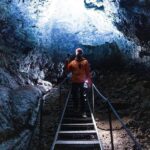
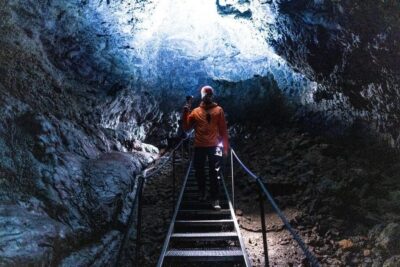
For the main add-on on day 8, there is Víðgelmir Lava Cave, described as Iceland’s largest lava cave and offered as an optional extra, not included. If you add it, the tour positions it as an unforgettable journey in comfort, which likely means a guided, managed experience rather than a DIY scramble.
Price and inclusions you should actually care about
For me, the most meaningful inclusions are the ones that remove risk and friction in winter.
You get glacier equipment included, and that is the difference between viewing ice and doing it with proper gear. You also get the super jeep ride to the Ice Cave, which matters in winter because timing and traction are everything. Whale watching from Hauganes is included, which is often a paid add-on on other itineraries.
You also get pickup and drop-off from designated bus stops and 7 nights accommodation, so you are not juggling hotel locations and transfer puzzles for eight days. WiFi on board is a small perk that helps more than you think, especially when the weather shifts and your dinner plans need a quick update.
Not included are the extras that many people want in winter: horseback riding, Vök Baths, and the Víðgelmir Lava Cave. Lunch and dinner are not included either. And if you end up needing winter clothing, rentals are listed with prices, including hiking boots rental, waterproof jacket and pants rental, and hat and gloves or a neck warmer. You can also use the included glacier equipment, but you still might need your own layering strategy.
The $679 total makes the most sense if you would otherwise pay for multiple separate guided tours plus transfers. If you are the type who likes to drive yourself, plan your own caves, and pick daily stops without a guide, then this may feel like more structure than you want. But for a winter Ring Road loop, structure is often what keeps the trip fun instead of stressful.
Who this tour fits, and who should choose something else
This tour makes sense if you want a complete Iceland winter sampler: geothermal sites, waterfalls, glacier access, black sand coasts, and the Snæfellsnes finale. You should also like a guided pace, because the stops are frequent and the day flow is planned.
It is a good match for:
- First-time Iceland visitors who want the highlights without guessing
- People who like photos but also want actual activity, like glacier hiking
- Winter travelers who value pickup, lodging, and reduced logistics work
It may not be the best match if:
- You need long stays in a single place to feel satisfied
- You hate short stop durations and prefer slow, free days
- You want meals provided, because lunch and dinner are not included
Should you book this 8 day winter circle tour?
I would book it if your priority is getting the broad sweep of Iceland in winter, while still including hands-on glacier moments and an aurora-friendly night setup. The value comes from the “hard parts handled for you,” pickup, guide, lodging, glacier equipment, and transport to the Ice Cave. Add in the included whale watching, and you get multiple experiences you would likely pay for separately.
I would hesitate if you want total control over routing and meal times, or if you know you prefer slow travel with fewer destinations. Winter days are also short, and this route intentionally keeps things moving.
If you are excited by a planned Ring Road loop with Snæfellsnes at the end, this is a solid winter option, and the logistics reputation is strong. A trip like this works best when you trust the plan, and this one is built to keep you looked after.
FAQ
What time does the tour start?
The start time is 8:00 am.
How long is the tour?
It is about 8 days.
Is pickup included?
Yes. Pickup and drop-off are offered from designated bus stops.
Is WiFi available during the tour?
Yes, there is WiFi on board.
What is included for glacier activities?
All glacier equipment is included, and there is a super jeep ride to the Ice Cave.
Is whale watching included?
Yes. Whale watching from Hauganes is included.
Are meals included?
No. Lunch and dinner are not included.
What are some add-ons that are not included?
Horseback riding, Vök Baths, and the Víðgelmir Lava Cave are listed as not included.
Is Northern Lights guaranteed?
No. The tour notes chances to see the Northern Lights based on conditions and where you stay, but it depends on good weather and clear skies.
What is the cancellation policy?
Free cancellation is available. You can cancel up to 24 hours in advance for a full refund, and if the experience is canceled due to poor weather, you are offered a different date or a full refund.
More Tours in Reykjavik
More Tour Reviews in Reykjavik
Around Snaefellsnes, A Few More
More Reykjavik write-ups from our desk
- Private Transfer from Reykjavik to Reykjavik Airport KEF by Sedan
★ 5.0 · 3 reviews - Northern Lights in Mini Bus, Photos, Hot Cocoa and Pastries
★ 5.0 · 3 reviews - Exclusive Westman Islands Adventure – A Private Day Tour
★ 5.0 · 3 reviews - Private South Coast tour with Glacier walk
★ 5.0 · 3 reviews - Borgarfjörður
★ 4.5 · 3 reviews - SOUTH COAST : The Discovery
★ 5.0 · 3 reviews
Snaefellsnes Peninsula Tours, compared.
 ★ 4.7From Reykjavik: Snæfellsnes Peninsula Full-Day TourFrom $1433,457 reviews
 ★ 4.7Reykjavik: Snæfellsnes Day Trip with Vatnshellir Lava CaveFrom $2191,108 reviews
 ★ 4.5Snaefellsnes Peninsula Full Day Tour from ReykjavikFrom $1381,036 reviews
 ★ 4.8Reykjavik: Snaefellsnes & Mt. Kirkjufell Guided Minibus TourFrom $159757 reviews
 ★ 5.0Snaefellsnes Small Group Tour with Homemade Meal from ReykjavikFrom $238737 reviews
 ★ 4.5From Reykjavik: Snaefellsness Peninsula small group day tourFrom $163571 reviews
 ★ 4.8From Reykjavik: Snæfellsnes Full-Day Tour with Homemade MealFrom $235493 reviews
 ★ 5.0From Reykjavík: Snaefellsnes & Kirkjufell Small Group Day TourFrom $147419 reviews
Browse the lists this tour appears in