
Review · GULLFOSS, GEYSIR & THINGVELLIR
Dive the Divide: Silfra Fissure Scuba Tour | Meet at Thingvellir
Blue water, cold air, serious geology.
This tour is interesting because you swim through Silfra fissure under Thingvellir National Park, where you can see the gap between the continental plates in jaw-dropping clarity. I like how it is set up as a tight, instructor-led plan with a clear route, briefings, and time in the water that is matched to the season.
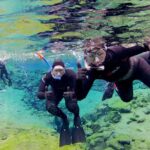
I love the small-group size (three divers or fewer), which makes it feel controlled and personal without turning into a private circus. I also like that almost everything matters for cold-water comfort is included: full dry suit gear, thermal layers, tanks, weights, and a warm post-session snack.
One possible drawback is the workload and paperwork. You carry heavy equipment for about 400 meters, and you need current dry suit experience, with proof of certification and a dry suit log that is recent.
In This Review
- Key things that make this Silfra session worth your attention
- Thingvellir to Silfra: why this plan works as a half-day mission
- Meeting at the Silfra entrance, then getting geared for a cold-water swim
- Dry suit rules and the certification requirement (this is not casual)
- The entry process: weights, ladder down, and that first waist-deep moment
- What you will see: Silfra Deep Crack, Silfa Hall, Cathedral, and Lagoon
- Summer vs winter timing, and what to expect from the cold
- Carrying gear, stamina, and the practical side of this challenge
- Equipment you get, and what you should bring anyway
- Price and value: what you are really paying for at $296.41
- Who should book this Silfra session, and who should skip it
- Final call: should you book the Silfra fissure underwater session?
- FAQ
- How long is the Silfra session?
- What is the group size?
- How long will I be in the water in summer and winter?
- What dry suit experience do I need?
- Can I wear glasses under the mask?
- What are my options if weather is bad or I cancel?
Key things that make this Silfra session worth your attention
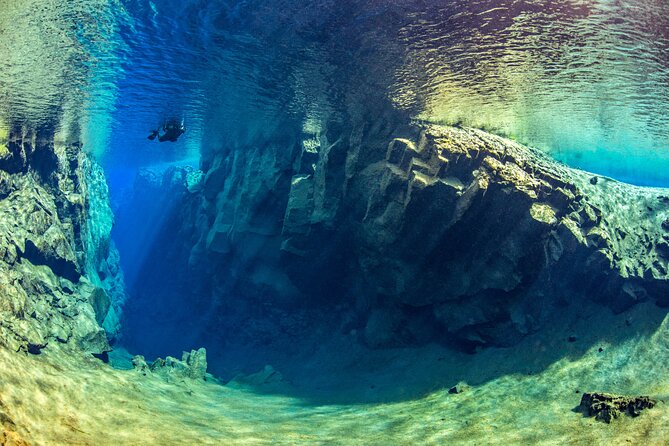
- Visibility can reach 100 meters, so details in the fissure and rock walls look crisp, not hazy
- Summer usually means two 30-minute water sessions, while winter typically means one about 45 minutes
- Full cold-water gear is included, including dry suit, mask, thermal undersuit, tanks, and weights
- The route is built around Silfa Hall, Cathedral, and Lagoon, with the Cathedral area reaching about 22 meters
- You can taste the water, and it is described as safe to drink
- Guides like Franceska are praised for comfort-first help, including warming gloves and careful dry suit setup
Same three stops, different guides and a different pace
Thingvellir to Silfra: why this plan works as a half-day mission
Thingvellir National Park is a smart base because it already has the big-picture story: you are in a place where tectonic plates pull apart, and that action is right under the surface. Silfra is the underwater piece of the puzzle, and the tour gives you a guided way to experience it without you guessing how to handle the cold, the gear, or the entry process.
The overall timing fits a normal day in Reykjavik. You are out there roughly 4 hours, and the group ends back at the same meeting point. That matters if you want to keep your Iceland itinerary flexible.
Meeting at the Silfra entrance, then getting geared for a cold-water swim
You meet your instructor at the Silfra parking area inside Thingvellir National Park, at Silfra meeting point, Vallarvegur, 806, Iceland. There is no pickup from Reykjavik, so you will want to plan your own ride and then park on-site.
Two logistics points are easy to miss until you are there:
- The national park charges a parking fee (listed as 500 ISK for a private car).
- You should expect a gear check and briefing before any serious water time.
Once you meet, the instructor runs through park rules, underwater procedures, and hand signals, then helps you get acquainted with your dry suit and route. That briefing is not just formality. It sets expectations for how you will move, how you will communicate, and what to do if conditions feel intense.
Dry suit rules and the certification requirement (this is not casual)
This is a challenging water activity, and the rules reflect that. You need previous dry suit experience, and the guide must be able to see your dry suit certification card or a logbook showing at least 10 previous dry suit sessions, signed by a dive professional. You also need to have done dry suit underwater work within the last two years, so your skills are current and you stay comfortable.
Also note the physical side. You should have strong fitness, because you carry heavy equipment for about 400 meters. That is not a gentle stroll with a backpack. It is part of what makes Silfra special, but it is also what filters out beginners.
If you wear glasses, plan ahead. The mask used for underwater viewing needs a good seal, so you cannot wear glasses underneath the mask. Your options are contact lenses, or bringing your own prescription goggles.
Warm clothing is required. You should wear warm undergarments (fleece or wool), and warm socks are required. Bring a change of clothes too. The information is clear: no dry suit can be guaranteed 100 percent dry unless it is made just for you.
Between the plates in a drysuit. Other Silfra slots
- Silfra: Snorkeling Between Tectonic Plates – Meet on Location★ 5.0 · 5,001 reviews
- Reykjavík: Silfra Fissure Snorkeling between Two Continents★ 4.7 · 1,712 reviews
- Silfra Drysuit Snorkeling with Free Photos – Meet on Location★ 5.0 · 1,299 reviews
- Silfra: Snorkeling Between Tectonic Plates Pick Up from Reykjavik★ 5.0 · 1,187 reviews
- Silfra Drysuit Snorkeling Tour with Free Photos – From Reykjavik★ 5.0 · 624 reviews
The entry process: weights, ladder down, and that first waist-deep moment
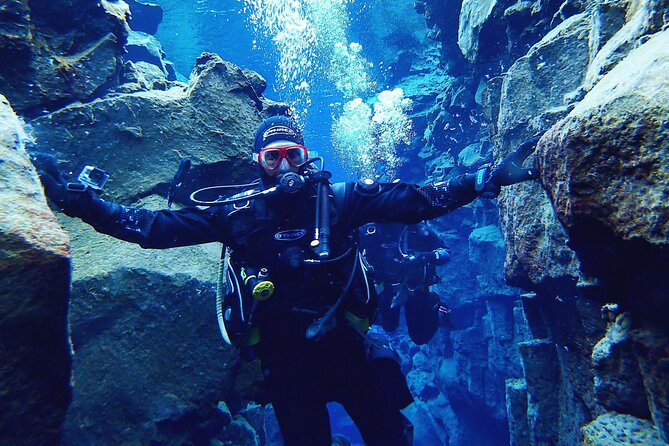
After the briefing, you head to the Silfra entrance and descend a ladder to a submerged metal platform. Then you stand in waist-deep water to acclimatize and get your breathing and buoyancy dialed in.
You will also do required weight and safety checks right there. This is one of the best parts of the whole experience because it removes surprises. Once you have checked fit, balance, and gear connections in shallow water, the deeper parts feel like a continuation, not a gamble.
And if you want to try something fun and a little strange, the tour notes that you can taste the water. It is described as safe to drink, which tells you a lot about how fresh and clean this system is.
What you will see: Silfra Deep Crack, Silfa Hall, Cathedral, and Lagoon
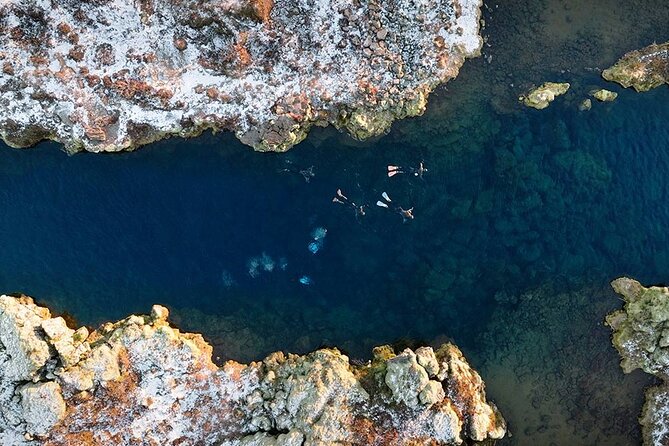
This is a place where geology is the main character. The tour moves through a sequence of underwater spaces, each with its own feel and structure.
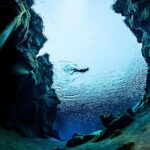
First, you follow your guide through the Silfra Deep Crack, where the two continental plates lie close together. The gap is dramatic, and when you swim through a narrow section and then see it widen, it makes the tectonic story feel immediate. Visibility is often extremely high, with the information stating it can go beyond 100 meters. That level of clarity is why the water looks so vivid rather than gray.
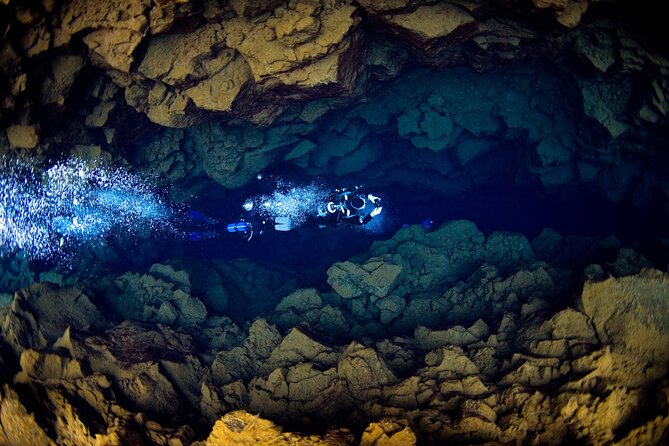
Next is Silfa Hall, which you enter after passing through the gap. This area feels like a transition space, a chamber-like widening that turns the route into more of a guided exploration than just a straight line swim.
Then comes Silfra Cathedral, the deepest point on the route at about 22 meters (72 feet). The key detail here is the cavern setting and the lava walls, so you are not just looking at open water. You are moving through a shaped, sculpted environment.
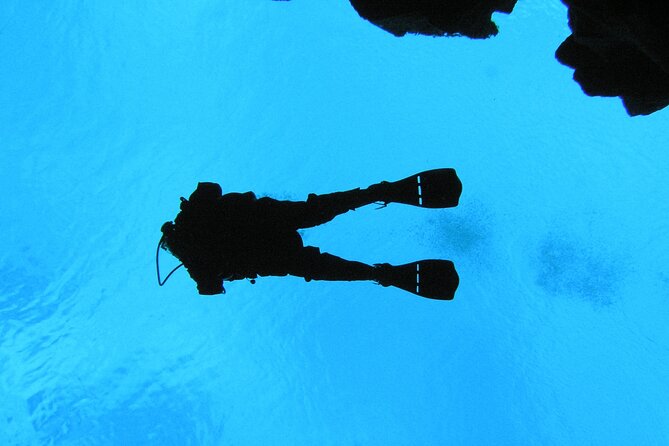
Finally you reach Silfra Lagoon. The lagoon is described as a brilliant-blue water area with seemingly endless visibility. It is the kind of place where you can’t help looking at your surroundings, because the walls, floor, and water color all change as your angle changes.
Depth and time are kept within limits set by the plan. You will be working at depths limited to about 18 meters (59 feet), and the route time depends on season.
Summer vs winter timing, and what to expect from the cold
Season affects everything here, especially how long you get in the water.
In summer, you typically have the option of making two 30-minute water sessions. In winter, when water temperatures are below freezing, you generally do one session of about 45 minutes.
In addition, winter weather can change the plan. The information states that if the temperature falls below -0°C, there is a possibility your instructor will change the tour into just one water session for safety reasons. Translation: do not assume you will always get the maximum time slot. If it gets seriously cold, the tour will prioritize safe decisions.
Cold comfort is a big deal, and this is where guides can make or break your experience. One guide name you may hear is Franceska, and the feedback about her is heavily comfort-focused. People describe her as calm and supportive, including warming gloves and taking extra care getting dry suits set correctly.
If you go in mentally prepared for cold and you follow the warm clothing rules, the experience becomes far more enjoyable. If you treat it like a standard scuba outing, you will probably feel miserable.
Carrying gear, stamina, and the practical side of this challenge
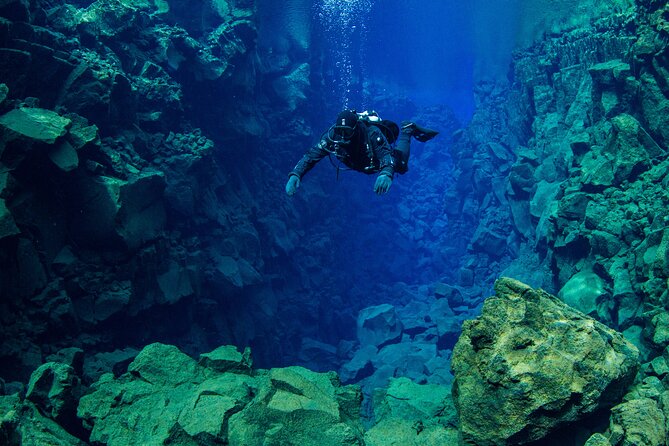
Silfra is not only cold. It is also physically demanding. You carry heavy equipment for around 400 meters, and that effort happens around the same time your body is already dealing with cold air, wet gear prep, and gear loading.
So here is the practical question I ask you: do you have the stamina to carry kit and then perform weight and buoyancy checks calmly? If you are short on fitness, or you get winded quickly, it can turn a fascinating trip into a stress trip.
The good news is that the tour structure is designed to manage that. You get a thorough briefing, a guided route, and warm drinks afterward. But you still need to show up ready for effort.
Equipment you get, and what you should bring anyway
The tour includes specialized gear. That is a real value point because cold-water dry suit setup can be expensive on your own.
Included gear is listed as:
- dry suit
- mask and fins
- thermal undersuit
- tanks and regulator
- weights
After you surface, you remove fins and other heavy equipment, then walk back to the parking lot. You change into everyday clothes and recharge with hot chocolate and cookies. That post-session warmth is more than a nice touch. It helps you recover while your body is still adjusting to normal temperature.
What you should bring:
- a change of clothing
- warm undergarments (fleece or wool)
- warm socks
- a plan for eye correction (contacts or prescription goggles), if needed
Price and value: what you are really paying for at $296.41
At $296.41 per person, this is not budget travel. But you are paying for several things that add up fast:
- a small group limited to three participants or fewer
- a guide who handles dry suit fit and route planning
- full cold-water gear, including the dry suit system, tanks, weights, and thermal undersuit
- a structured experience that includes warm drinks and snacks afterward
On top of that, you are operating in a protected location with specific procedures and safety constraints. Those constraints create real costs in training, equipment management, and instructor time.
Your add-on costs are mainly about getting yourself there. You pay the park parking fee of 500 ISK for a private car, and you do not get Reykjavik pickup included.
Who should book this Silfra session, and who should skip it
This works best for:
- scuba-certified participants with current dry suit experience
- people who handle cold well and follow warm clothing instructions
- divers who want a structured, guided route through multiple named underwater areas
You should think twice if:
- you do not have proof of dry suit experience within the required window
- you are not physically comfortable carrying heavy equipment for about 400 meters
- you rely on glasses under a mask, because you would need contacts or prescription goggles
Age is 18+, so it is also an adult-only activity.
And one more real-world mindset tip: go in expecting cold and planning to stay calm. The clarity and geology are worth it, but only if your body is not fighting the environment the whole time.
Final call: should you book the Silfra fissure underwater session?
If you meet the dry suit requirements, I think it is a strong booking. You are getting a small-group experience, serious instructor support, and a route that moves through Silfa Hall, Cathedral, and Lagoon with extremely high visibility. The gear inclusion and the hot chocolate and cookies after make it feel complete rather than like a gear rental with a short walk-off.
If you are unsure about your cold tolerance or you are missing recent dry suit experience, this is not the time to test yourself. Silfra is challenging, and the tour is built for people who already know how to stay in control in a dry suit.
FAQ
How long is the Silfra session?
The experience is about 4 hours in total.
What is the group size?
The tour has a maximum of 3 travelers.
How long will I be in the water in summer and winter?
In summer, you can make two 30-minute water sessions. In winter, if water temperatures are below freezing, you will perform a single session of approximately 45 minutes, and there is a possibility it may be changed to just one session if temperatures fall below -0°C.
What dry suit experience do I need?
You need previous dry suit experience. Your guide needs to see your dry suit certification card or a logbook showing at least 10 previous dry suit sessions signed by a dive professional, and you need to have used a dry suit within the last 2 years.
Can I wear glasses under the mask?
No. The mask needs a proper seal, so you cannot wear glasses underneath it. You will need to use contact lenses, or bring your own prescription goggles.
What are my options if weather is bad or I cancel?
You can cancel for a full refund up to 24 hours before the start time. If the experience is canceled due to poor weather, you will be offered a different date or a full refund.
More Tour Reviews in Reykjavik


Silfra, More Ways In


Gullfoss, Geysir and Thingvellir Again
More Reykjavik write-ups from our desk
- Private Transfer from Reykjavik to Reykjavik Airport KEF by Sedan
★ 5.0 · 3 reviews - Northern Lights in Mini Bus, Photos, Hot Cocoa and Pastries
★ 5.0 · 3 reviews - Exclusive Westman Islands Adventure – A Private Day Tour
★ 5.0 · 3 reviews - Private South Coast tour with Glacier walk
★ 5.0 · 3 reviews - Borgarfjörður
★ 4.5 · 3 reviews - SOUTH COAST : The Discovery
★ 5.0 · 3 reviews
Gullfoss, Geysir & Thingvellir, compared.
 ★ 5.0Golden Circle, Bruarfoss & Kerid Crater by Minibus from ReykjavikFrom $114720 reviews
 ★ 4.6From Geysir: Snowmobile Adventure on Langjökull GlacierFrom $280503 reviews
 ★ 4.5Snowmobiling Adventure on Langjokull Glacier from GullfossFrom $265377 reviews
 ★ 4.7From Gullfoss: Langjökull Glacier Snowmobile TourFrom $259294 reviews
 ★ 4.7Reykjavík: Golden Circle, Bruarfoss, and Kerid Crater TourFrom $111161 reviews
 ★ 4.7Gullfoss: Sleipnir Monster Truck Tour of Langjökull GlacierFrom $167137 reviews
 ★ 4.2From Gullfoss: Langjökull Ice Cave and Snowmobile TourFrom $304124 reviews
 ★ 4.0Ice Cave and Snowmobile Tour from GullfossFrom $309117 reviews
Browse the lists this tour appears in